

The handpan is a fascinating musical instrument, perfect for beginners. It is easy to play and has a soothing sound. This attracts many new musicians.
Created in Switzerland in 2001 by PANArt, the handpan follows a diatonic scale. This makes it possible to create harmonious melodies, even without musical knowledge. When choosing your first handpan, consider the scale, frequency, and sustain. We will guide you in buying a suitable handpan.
We will discuss scales, frequency, and sustain. We will also cover materials suitable for beginners. This information will help you make the right choice for your musical practice.
Introduction to the handpan
The handpan is attracting more and more enthusiasts around the world. It is a unique instrument that belongs to the idiophone family. It is often associated with acoustic percussion and is distinguished by its mysterious, soothing timbre.
What is a handpan?
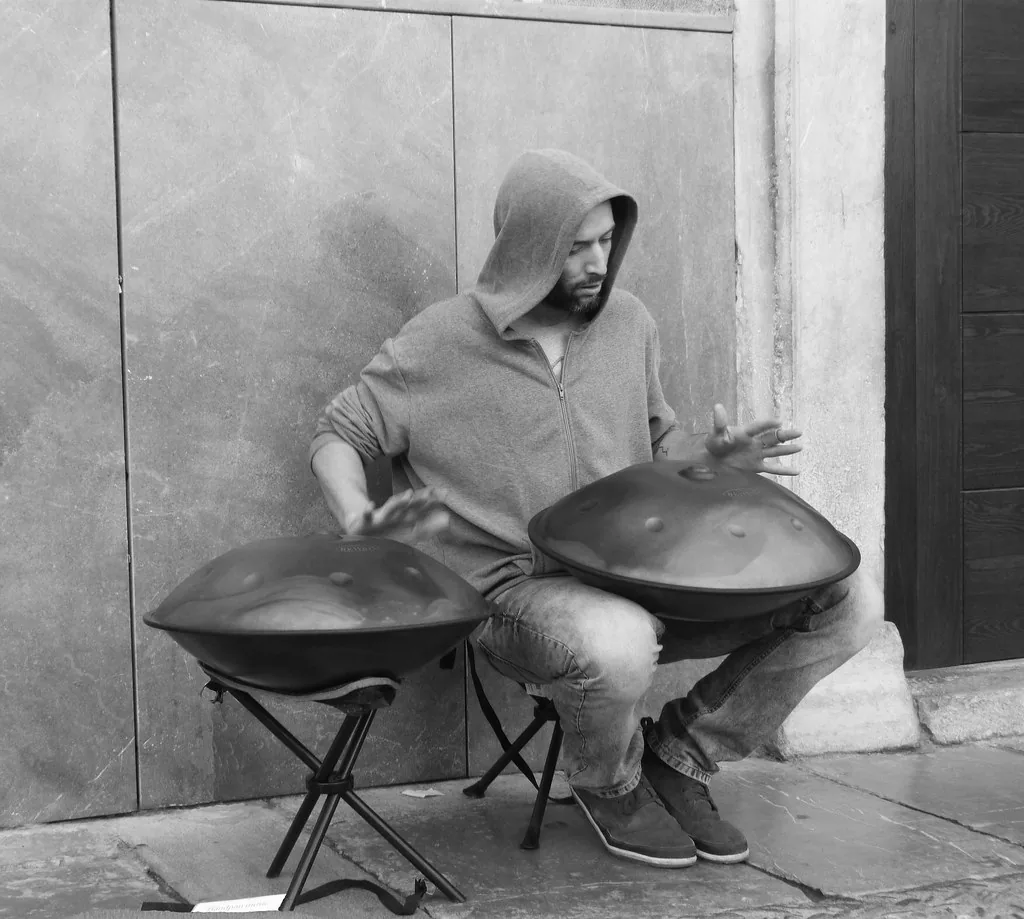
The handpan was created in Switzerland in 2001 by PANArt. It consists of two steel shells that form an ovoid sphere. The upper surface features a central note, the “ding,” surrounded by several other notes.
This allows musicians to play melodies without any musical knowledge. The handpan’s unique sound is perfect for meditation or relaxation.
Origin and popularity of the instrument
The origin of the handpan dates back to the 2000s. This instrument draws inspiration from steel drums and the ghatam. The term “handpan” was introduced in 2007 by Pantheon Steel as an alternative to the Hang.
Since then, it has become very popular, prompting other manufacturers to create similar models. PANArt stopped producing the Hang in 2013 to preserve its value. Today, more than 400 handpan makers exist, offering a wide variety of quality instruments.
The handpan appeals to many audiences, from yoga teachers to sound-healing practitioners. Its tones and fascinating harmonics continue to generate interest, reinforcing its status in contemporary music.
Understanding handpan scales
The choice of handpan scale is crucial. It determines the musical atmosphere the instrument can create. Scales influence the melodies and emotions that can be expressed. This is an essential consideration when making choices for beginners.
Definition and importance of the scale
A handpan scale is a set of notes that creates a unique tonality. Each scale can evoke different emotions, such as joy or melancholy. The choice of scale influences both how the instrument feels and the playing experience.
Different types of scales
Several handpan scales are available, including major scales, minor scales, and Eastern scales. Major scales sound joyful, minor scales are deeper, and Eastern scales offer unique tones. The D minor scale is ideal for beginners: it is easy to learn and rich in melodic possibilities.
Which scale should a beginner choose?
Beginners should choose simple scales, such as D minor. This makes it possible to start exploring music without becoming overwhelmed. Listening to different scales helps you find the one that suits you best. Choosing your handpan scale according to your emotions can enrich the musical experience.

Handpan frequency: 432 Hz or 440 Hz?
The world of handpans offers two main frequencies: 432 Hz and 440 Hz. Each frequency has its own characteristics, which influence the choice of instrument depending on how it will be used.
Overview of the two frequencies
432 Hz is considered natural and is said to promote a deep, meditative listening experience. 440 Hz, the international standard since 1939, is preferred for its compatibility with other instruments. It is chosen for performances where a dynamic sound is essential.
How frequencies affect the sound
The 432 Hz and 440 Hz frequencies alter the sound of handpans. The 432 Hz frequency is ideal for meditation and offers soothing tones. The 440 Hz frequency, meanwhile, is more powerful and energetic, influencing the emotion conveyed by the music.
Choosing the right frequency for playing in a group
The choice of frequency is crucial when playing with other musicians. For a group performance, 440 Hz is recommended so that the handpan can be tuned to the other instruments. The 432 Hz frequency is preferred for its spiritual qualities, particularly for meditation or sound healing. The choice depends on each artist’s musical and personal goals.
| Characteristic | 432 Hz | 440 Hz |
|---|---|---|
| Sound | Soothing and meditative | Dynamic and powerful |
| Integration into a group | Difficult with other standard instruments | Easy to integrate |
| Preferred by | Meditation-focused musicians | Musicians who play in groups |
| Use | Personal experiences | Live performances |
Handpan sustain
Sustain is crucial to a handpan’s sound. It refers to the duration of the notes played and changes the musical experience. Good sustain makes the notes harmonious and captivates both the listener and the player.
Definition of sustain
Sustain is the duration of the notes after they are struck. Good sustain is essential on a handpan. It allows sounds to unfold without becoming muddled. Ideal sustain lasts between 8 and 12 seconds and adds depth to the music.
Ideal sustain for beginners
For beginners, ideal sustain is crucial. Medium sustain is recommended. It extends the notes and makes learning easier. Sustain that is too short makes the music sound dry, while sustain that is too long makes the duration of the notes harder to manage. To get off to a good start, it is essential to choose a model with suitable sustain.
| Type of sustain | Duration | Impact on learning |
|---|---|---|
| Short sustain | Less than 5 seconds | Notes sound too dry and are difficult to listen to |
| Medium sustain | 8 to 12 seconds | Makes learning easier and provides beautiful resonance |
| Long sustain | More than 15 seconds | Overlapping notes and increased complexity |
Evaluating a handpan’s sound quality
To fully appreciate a handpan, you need to evaluate its sound quality. This includes the balance of the notes, which is essential for producing harmonious music.
Importance of note balance
The balance of the notes is crucial to a handpan’s sound quality. Each note should have similar sustain and timbre. This ensures a pleasant listening experience.
A good handpan has notes that resonate clearly and purely. This makes it possible to create rich compositions. When evaluating a handpan, you should check this balance to avoid flaws that undermine its harmony.
Understanding crosstalk
Crosstalk refers to interference between notes. A good instrument should minimize this interference. This allows each note to resonate distinctly.
A handpan’s ability to isolate sounds creates a rich listening experience. The clarity of its notes reflects its sound quality. A handpan with little crosstalk ensures beautiful musical performances and encourages creative exploration.
Materials used to make handpans
Choosing the right material is essential to a handpan’s sound quality and durability. The main materials are nitrided steel and stainless steel. Each offers advantages that influence the playing experience.
Nitrided steel or stainless steel
Nitrided steel is valued for its warm sound. However, it requires regular maintenance. Stainless steel, meanwhile, is highly durable and resists corrosion well. It offers a clear sound without requiring much maintenance. Here is a comparison table:
| Characteristic | Nitrided steel | Stainless steel |
|---|---|---|
| Sound | Warm and enveloping | Clear and full |
| Corrosion resistance | Moderate | Very high |
| Maintenance | Moderate | Low |
| Durability | High | Very high |
Which material should a beginner choose?
For beginners, choosing the right material is crucial. Instruments made of stainless steel are often recommended because of their durability and low maintenance requirements. This allows you to focus on learning without worrying about upkeep. Although nitrided steel is musical, it may be less suitable for beginners. Stainless steel is a wise choice because it is easy to use and delivers good sound performance.

Buying your first handpan
Buying a handpan is an exciting process that requires making the right choice. This ensures lasting satisfaction and many years of use.
Criteria to consider before buying
Before you buy a handpan, you should consider several purchase criteria. This will help you choose the instrument that suits you:
- Desired scale (recommended for beginners: D minor)
- Tuning frequency (432 Hz for relaxation, 440 Hz for composition)
- Sound quality (balance of the notes and sustain of 8 to 12 seconds)
- Material (stainless steel is recommended for its durability)
A handpan’s sound quality depends on the balance of the notes and its sustain. Manufacturers such as ZenaPan check the notes to make purchasing easier.
Where to buy a handpan: new or used?
You can buy a new or used handpan. A new handpan comes from a reputable manufacturer, which ensures high quality. A used handpan may be less expensive, but check its condition and sound before buying it.
Forums and online groups are good sources for finding used handpans. Make sure the seller is reputable before buying. By following these tips, you will find the handpan that suits you.
Conclusion
Choosing your first handpan is very important. You should think carefully about scales, materials, and sound quality. This helps beginners enjoy a rich musical experience.
Manufacturers use stainless steel and nitrided steel. This ensures durability and sound quality, two crucial considerations for beginners.
By listening to and feeling the tones, beginners discover the magic of the handpan. Scales such as D minor or C major offer soothing melodies. This helps you relax and feel better.
Learning the handpan is more than just a musical passion. It is also a way to relax and feel better. Beginners should choose carefully to make the most of their experience.