

The handpan is a captivating instrument that offers a unique range of sounds. It is traditionally played with the hands, but using mallets opens up new possibilities.
This approach allows you to explore the notes with a different kind of precision. Mallets provide a distinctive rhythmic texture that is ideal for certain musical styles.
Each method has its advantages. Finger playing provides a direct connection with the instrument, while mallets allow for more percussive musical expression.
Your choice of equipment has a considerable influence on the result. Some musicians alternate between the two techniques according to their creative needs.
Introduction to the handpan and mallets
Created in the 2000s, the handpan fascinates players with its flying-saucer design. This melodic instrument is directly descended from the Hang drum, whose acoustic mechanics it improves upon.
Introducing the instrument
Made from two steel hemispheres, the handpan produces between 9 and 13 notes, depending on the model. Its upper surface features tuned notes, while the lower section acts as a resonator.
Unlike traditional steelpans, the handpan has a more limited range but longer sustain. Its warm tone blends perfectly with contemplative or experimental music.
“The handpan reinvents the art of melodic percussion, combining precision with freedom of expression.”
Why use mallets?
Mallets open up new sonic possibilities. In particular, they provide:
- Greater projection in concert
- The ability to perform complex rhythms
- More pronounced dynamic nuances
Historically, steelpans are played with mallets. This technique adapts perfectly to the handpan for certain musical styles.
Differences from finger playing
The following table summarizes the main differences:
| Criterion | Finger playing | Mallets |
|---|---|---|
| Precision | Moderate | High |
| Expressiveness | Warm | Percussive |
| Vibrato | Natural | Controlled |
| Fatigue | Hands | Forearms |
Some musicians alternate between the two methods depending on the context. The choice often depends on the repertoire and acoustic environment.
Choosing the right equipment
Good equipment transforms the experience of playing a handpan. Suitable mallets and accessories improve sound quality and make the instrument easier to play.
Suitable types of mallets
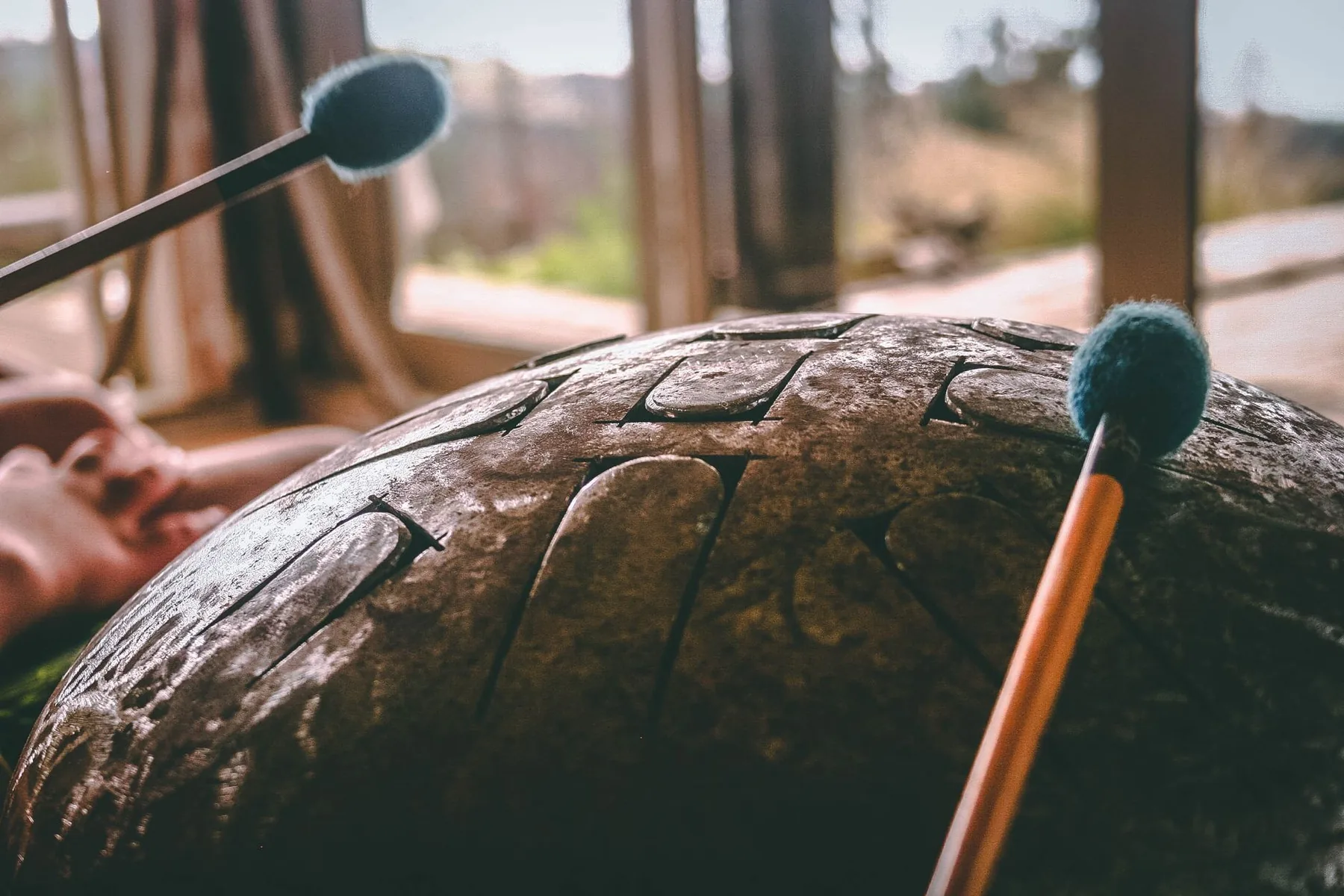
The material affects resonance. Carbon models provide powerful projection, while wood produces a warmer tone.
The heads also vary:
- Silicone: long-lasting with clear sounds.
- Felt: softens the high frequencies for a gentle result.
Selection criteria
A weight of between 60 and 80 g ensures optimal control. The handle diameter should suit the shape of your hands to prevent fatigue.
Try several models before buying. Manufacturing quality directly affects note accuracy.
Additional accessories
An ergonomic stand stabilizes the instrument. For maintenance, a kit containing a microfiber cloth and protective oil is essential.
For outdoor use, choose lightweight, durable mallets. Brands such as Meinl and Rav Vast offer reliable options.
Positioning and posture
Posture plays a key role in mastering the handpan with mallets. A good position reduces muscle fatigue and improves note accuracy.
Holding the mallets
There are two main ways to hold the mallets:
- Matched grip: palms facing downward, ideal for beginners
- Traditional grip: one palm facing upward, providing greater nuance
The Moeller technique, adapted to the handpan, helps conserve energy in the hands. Keep your wrists relaxed to avoid tension.
Handpan position
The instrument should be tilted by 15 to 20° to provide optimal access to the notes. Use a stand whose height can be adjusted to suit your stature.
This position provides:
- Better visibility of the striking areas
- Natural arm movement
- Optimal resonance
Player ergonomics
Sit upright with your shoulders relaxed. An ergonomic cushion can help correct your posture.
Always warm up your wrists before playing. Simple exercises help prevent pain.
| Element | Recommendation | Effect |
|---|---|---|
| Seat height | Thighs parallel to the floor | Prevents lower-back tension |
| Distance from the instrument | Arms slightly bent | Greater precision |
| Foot position | Feet flat on the floor | Better balance |
“Correct posture unlocks musical potential while protecting the body.”
Basic mallet techniques
Mastering the fundamentals opens up a rich sonic universe with this instrument. These essential methods allow you to make full use of its melodic and rhythmic capabilities.
Single strokes
The ideal striking area is 5 cm from the center of each note. This distance optimizes projection without altering the tone.
Use the mallets’ natural rebound to conserve energy. Keep your wrist relaxed and let it guide the movement without forcing it.
Controlling resonance
Damping is achieved by applying sideways pressure with the free palm. This method preserves the purity of the notes while cutting off their sustain.
Sympathetic harmonics require particular attention. Striking too forcefully can activate them unintentionally.
Alternating hands
Begin with eighth-note patterns, then move on to triplets. This progressive system develops independence.
Suitable rhythmic notation helps you visualize the sequences. Prioritize consistency before speed.
“Mastering dynamic contrasts creates emotion: softness and power converse in every musical phrase.”
These contrasting sounds enrich the performance. With practice, rhythm becomes second nature, freeing artistic expression.
Deepening your handpan mastery
Progressing to the intermediate level involves exploring new sonic dimensions. These methods enrich your artistic expression and broaden your creative possibilities.
Rolls and tremolos
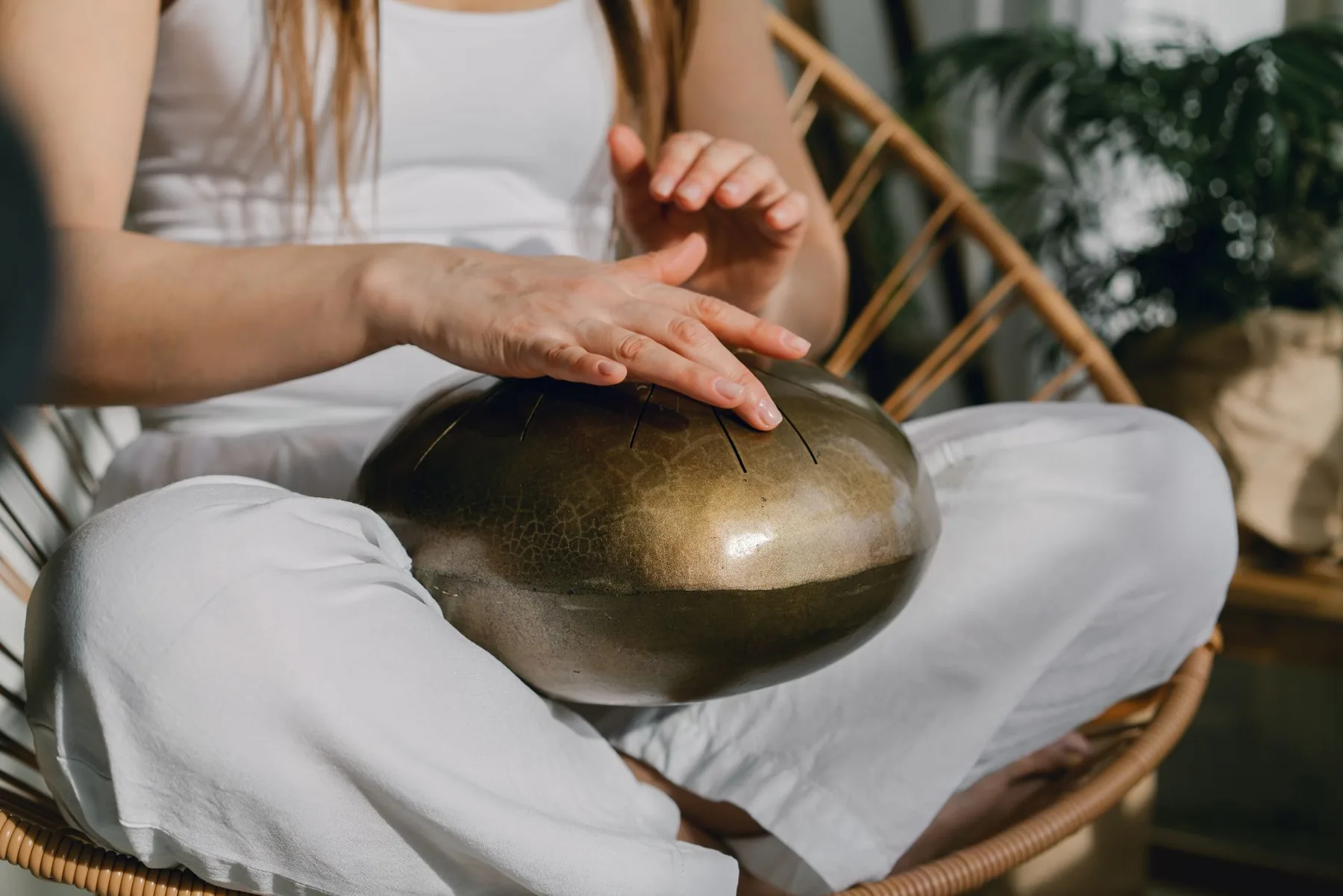
Controlled rebound is essential for producing fluid rolls. Begin by practicing slowly and alternating hands, then gradually increase the speed.
For tremolos, use simple scales as a foundation. This technique creates enveloping effects that are perfect for transitions.
Polyrhythmic playing
Combining 3/4 and 4/4 meters requires active listening. Begin with coordination exercises between your dominant and non-dominant hands.
Fifth and seventh harmonics add a unique color. Gradually incorporate them into your rhythmic patterns.
“Polyrhythm is a dialogue between time and space: each hand tells a different story that comes together as a single piece of music.”
Controlling dynamics
Managing nuances from pianissimo (pp) to fortissimo (ff) requires precise control of your range of motion. Adjust the pressure and angle of the mallets according to the desired effect.
Apply these variations to modal blues scales to develop expressiveness. One effective exercise consists of reinterpreting a classical piece while incorporating these principles.
- Roll: maintain a steady flow without accelerating
- Polyrhythm: visualize the diverging pulses
- Dynamics: practice the extremes before the intermediate nuances
Exploring sounds
Exploring the handpan’s sound reveals unexpected possibilities. Mallets provide access to subtle tones that are often impossible to achieve with the fingers.
Special effects
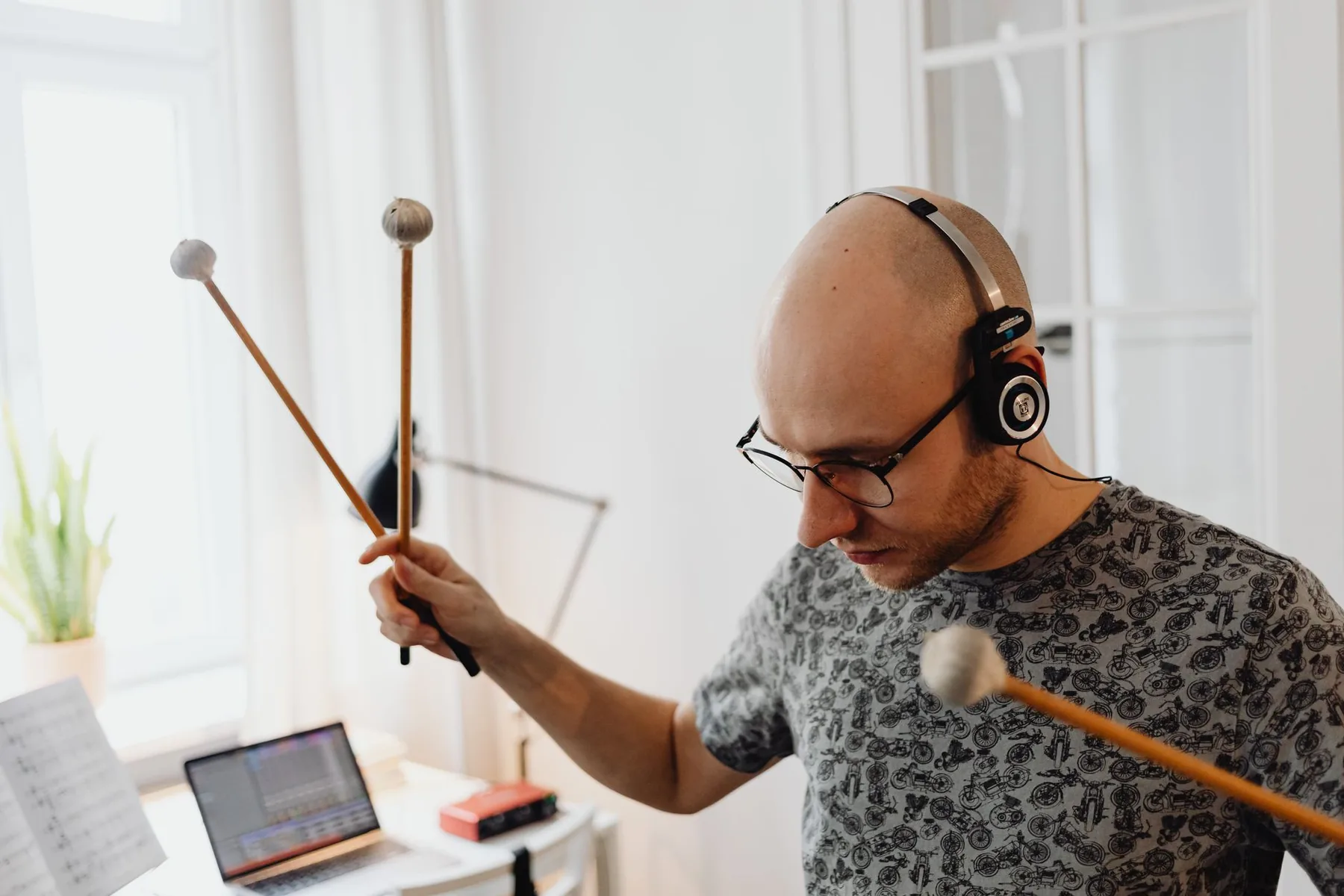
The scraping technique on the outer rim creates distinctive vibrations. This sideways movement produces a grainy sound that is ideal for transitions.
Buzz rolls on the fundamental note add density. This effect requires precise control of pressure and attack angle.
Striking areas
Each area produces notes with distinct characteristics. Resonance differs between the center and the edge of each tone field.
Accurate mapping enables you to make full use of these tonal variations. Some areas are better suited to melodies, while others work better for accompaniment.
Harmonics with mallets
Activating harmonics requires a light, quick stroke. The exact position varies according to the instrument’s tuning.
Experiment with different mallets to discover new colors. Modified models can reveal surprising tones.
“True artistry consists of making metal sing: every note becomes a universe to explore.”
Comparative recordings of these nuances help refine your technique. This valuable tool reveals details that are often imperceptible in real time.
Practical exercises
Progressing with the handpan requires a methodical approach. Focused advice and regular practice help you absorb the essential techniques.

Scales and arpeggios
Practicing handpan scales improves fluidity. Begin with simple sequences before moving on to complex arpeggios.
The following table compares different approaches:
| Exercise | Benefit | Recommended duration |
|---|---|---|
| Major scale | Note accuracy | 10 min/day |
| Arpeggio in 12/8 | Hand coordination | 15 min/day |
| Harmonics | Active listening | 5 min/day |
Rhythmic patterns
Gradually incorporate these elements:
- Silence as musical breathing
- Alternating duple and triple meter
- Call and response using a recorder
Analyze exemplary phrasing, such as that of David Charrier. This method reveals nuances that are imperceptible to the ear.
Guided improvisation
Creativity is fully expressed through adaptable chord progressions. The modal method provides a framework without being restrictive.
“Improvisation is a conversation with yourself: every note calls for an intuitive response.”
A 30-day program effectively structures your practice. Alternate technical exercises with periods of free expression.
Common mistakes and solutions
Identifying and correcting common mistakes greatly improves the musical experience. Here are the problems players encounter and some advice on resolving them.
Sound problems
A metallic sound or unwanted noise often indicates poor technique. Common causes include:
- Striking too hard (risk of detuning)
- Using the wrong contact area on the notes
- Unsuitable mallets (too hard or too heavy)
To remedy this, adjust the angle of the mallets and use light strokes. A recording test can help diagnose the problems.
Muscle fatigue
Forearm tension occurs when posture is poor. A targeted strengthening program is essential:
- Wrist warm-up (5 min before playing)
- Resistance-band exercises
- Regular breaks every 20 minutes
This advice preserves endurance and improves playing quality.
Protecting the instrument
Regular maintenance extends the handpan’s lifespan. Adopt these habits:
- Clean it after every session with a microfiber cloth
- Use a moisture-resistant case for transportation
- Avoid extreme temperatures (a critical mistake)
“A well-maintained instrument retains its sonic magic for much longer.”
A pre-concert inspection routine ensures optimal performance.
Conclusion: developing your personal style
Your musical journey with this unique instrument is a limitless adventure. Bringing together the methods you have learned forms the foundation of your distinctive musical expression.
Regularly record your discoveries in a practice journal. This valuable tool reveals your progress and stimulates creativity.
Dare to draw on different cultures to enrich your world. The entire world offers inspiring rhythms to incorporate.
Technological innovations open up new horizons. Stay curious to make full use of these possibilities.
Take part in jam sessions to share your experience. These encounters often transform the way you see your art.
Your style emerges naturally through practice and boldness. Let your unique sensitivity guide you.