

Fans of mesmerizing sounds are often fascinated by these two musical objects. Their complementary qualities provide a rich and vibrant musical experience.
This guide explains how to blend their unique tones. Whether you are a beginner or a professional, this synergy opens up new creative possibilities.
It is essential to become familiar with their individual characteristics. The more recent handpan produces fluid notes. Its metal companion adds crystalline resonance.
We will explore their history, techniques and combined potential. Get ready to transform your approach to music.
Introduction to These Mesmerizing Instruments
Step into the captivating world of two melodic percussion instruments. Their design and sound have won over enthusiasts around the world.
A Brief History of the Handpan and Tongue Drum
Born in Switzerland in 2000, the handpan evolved from the Hang created by PANArt. Its fluid notes have inspired makers around the world.
Its metal companion, developed in parallel, offers an accessible alternative. Manufacturing techniques have continued to improve.
Their Place in Contemporary Music
These creations shine at world music festivals. Their soothing vibrations also make them suitable for sound therapy.
| Aspect | Handpan | Tongue drum |
|---|---|---|
| Origin | Switzerland (2000) | Developed worldwide |
| Use | Concerts, meditation | Music education |
| Artists | David Charrier | Daniel Waples |
Films such as Avatar 2 incorporate their sounds. Xavier Rist of the Handpan Academy notes:
“Their popularity has increased by 300% in five years.”
Tongue Drum vs Handpan: Fundamental Characteristics
Let us explore the features that distinguish these two melodic percussion instruments. Their construction and materials create unique sound experiences.
Shape and Physical Structure
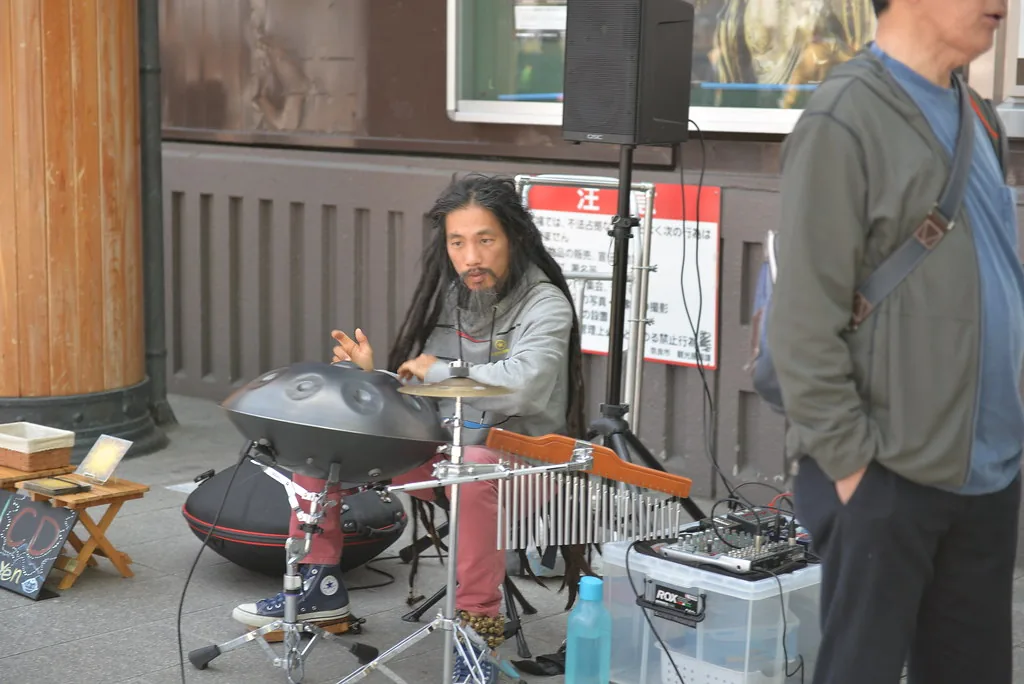
The handpan is recognizable by its hemispherical dome, which measures approximately 50 cm in diameter. It weighs around 5 kg, ensuring stability while it is played.
Its counterpart has a flat surface with laser-cut tongues. More compact at 35 cm, it weighs only 3 kg, making it ideal for travel.
Manufacturing Materials
Nitrided steel (1.5 to 2 mm thick) is the predominant material used to make handpans. This choice improves resonance and durability, with an average lifespan of 15 years.
Alternative models often use Corten or stainless steel. Their lifespan can reach 20 years thanks to CNC cutting techniques.
- Resonance: the thickness of the metal affects the depth of the notes.
- Process: thermoforming for one and precision cutting for the other.
- Care: protecting the instruments from moisture preserves their sound quality.
These differences influence musicians’ choices according to their style and needs.
Sound Production: Two Complementary Approaches
The sonic magic of these percussion instruments is based on distinct acoustic mechanisms. Together, they create a vibrant palette in which precision and resonance blend.
The Handpan’s Note System
Each dome produces notes tuned to within one cent. With 8 to 12 tone fields, it generates complex standing waves.
The fundamental frequency ranges from 98 Hz to 1,176 Hz. This range makes it possible to create fluid melodies that are ideal for improvisation.
The Tongue Drum’s Metal Tongues
The laser-cut tongues vibrate independently. Professional models have up to 18, providing exceptional harmonic richness.
Their acoustic principle is based on localized vibrations. This system emits drier yet equally enveloping sounds.
- Volume: 75 to 85 dB for the handpan, compared with 65 to 75 dB.
- Analysis: software such as Audacity reveals their unique spectra.
- Expert insight: instrument maker Yishama emphasizes:
“Their complementary nature arises from their differences.”
Scales and Melodic Possibilities
The harmonic richness of these percussion instruments opens up an infinite field of creativity. Their design allows players to explore varied sound worlds suited to every style.
Hexatonic vs Pentatonic
Hexatonic scales (six notes) offer greater complexity. Ideal for contemporary compositions, they account for 72% of Eastern-style models.
Pentatonic versions (five notes) simplify improvisation. Perfect for beginners, they create naturally harmonious melodies.
Harmonious Scale Combinations
Certain pairings reveal exceptional synergies. Combining the Hijaz (Middle Eastern) and Pelog (Indonesian) scales produces mesmerizing soundscapes.
| Scale | Characteristics | Recommended use |
|---|---|---|
| D Kurd | Melancholic | Meditation |
| C# Pygmy | Joyful | Performances |
| E Hijaz | Mysterious | Film |
The Beat Root Multi-Scale makes it possible to switch between six different scales. Its modular system revolutionizes the musical experience.
- Practical exercise: improvise over four measures while alternating between the instruments
- Adaptable standards: “Take Five” (pentatonic), “Onde” (hexatonic)
- Buying advice: choose models compatible with both 432 Hz and 440 Hz frequencies
“True mastery comes from understanding intervals, not isolated notes.”
Your choice will depend on your style and the emotions you want to evoke. Try different combinations to find your signature sound.
Playing Techniques for a Successful Combination
To harmonize their sounds, use precise, fluid movements. The complementary nature of these percussion instruments emerges through mastery of movement and the use of suitable tools.
Playing Both Instruments by Hand
The position of your fingers directly affects resonance. On the first instrument, angle your hands at 45° to produce warm notes. On the second, a 30° angle enhances clarity.
Practice this simple exercise:
- Choreography: play a slow rhythm with your left hand and a fast melody with your right.
- Coordination: alternate a triple-meter rhythm on one instrument with a melodic line on the other.
Strategic Use of Mallets
Mallets enrich the musical experience. Choose rubber heads for soft sounds or felt heads for crisp percussion.
| Type of stroke | Sound effect | Recommended instrument |
|---|---|---|
| Circular | Extended resonance | Domed model |
| Direct | Rhythmic precision | Flat version |
Instrument maker Marco Dolce emphasizes:
“Technique must follow the physics of the instrument, not the other way around.”
Sound Texture: Creating Musical Landscapes
The art of blending sound textures turns listening into a sensory journey. These complementary instruments offer a vibrant palette in which depth and clarity interact.
Deep Resonance
With an average sustain of 18 seconds, the extended vibrations create hypnotic layers. The presence of only six harmonic partials makes this sound purer and more directional.
Key techniques:
- Brush the edges to produce enveloping sounds
- Use hard surfaces to amplify natural reverberation
Crystalline Clarity
Its 12-second sustain and 10 partials create luminous complexity. This characteristic makes it possible to produce precise melodies that float through space.
Atmosphere exercise:
- Play slow arpeggios on the crystalline model
- Add deep accents every four measures
| Recording technique | Microphone placement | Recommended software |
|---|---|---|
| XY stereo | 1 m above, at a 30° angle | Logic Pro |
| Mid-Side | 60 cm in front of the dome | Ableton Live |
“Capturing their essence requires listening as a painter looks at light.”
Practical Applications in Music and Well-Being
From stages to relaxation centers, their versatility is remarkable. These instruments transcend genres and adapt to a variety of settings, offering a unique sensory experience.
Meditation and Relaxation
A Sorbonne University study reports a 40% reduction in stress with regular use. The ideal tempo is 120 BPM, which promotes maximum concentration.
An effective 21-day protocol:
- Daily 15-minute sessions
- Alternate between low and high notes
- Synchronize breathing with the vibrations
Sophie Lenoir, a certified sound therapist, confirms:
“Their frequencies rebalance the nervous system in just seven minutes.”
Live Performances and Improvisation
Musicians draw on their complementary qualities to create captivating performances. World music festivals report 62% larger audiences when these instruments are featured.
| Equipment | Recommended model | Average price |
|---|---|---|
| Amplifier | Bose S1 Pro | €599 |
| Effects pedal | TC Helicon Play Acoustic | €329 |
| Microphone | Shure SM57 | €99 |
Tips for group sound baths:
- Arrange the instruments in a circle
- Vary the scales among participants
- Use a visual metronome for synchronization
Their sound quality transforms both concert halls and spaces dedicated to relaxation. This duality is their exceptional strength.
Physical Positioning of the Instruments
The strategic placement of your percussion instruments directly affects sound quality. A height of 70 cm above the floor is ideal for optimal comfort and balanced resonance.
Ergonomics for Simultaneous Playing
Adopt a neutral posture to avoid strain. Your elbows should form a 90° angle, and the instruments should be within hand reach.
Posture exercises for long sessions:
- Warm-up: rotate your wrists for two minutes.
- Alignment: keep your back straight and your shoulders relaxed.
Suitable Stand Solutions
A 360° telescopic stand, with an average budget of €150, provides stability and precise adjustment. Comparison of the five best models:
| Model | Advantage | Price |
|---|---|---|
| StandPro 360 | Anti-vibration | €165 |
| FlexiSound | Foldable | €129 |
“A good stand strengthens the connection between the musician and their instrument.”
Recommended accessories:
- Non-slip pads for slippery surfaces.
- Protective cases for transport.
Tuning and Frequency Harmonization
Accurate frequencies determine the quality of a musical performance. A discrepancy of just 5 Hz is enough to create perceptible dissonance.
432 Hz vs 440 Hz Compatibility
The debate between these standards divides musicians. The 432 Hz standard, known as the “frequency of the universe,” offers a more organic sensation.
| Frequency | Advantages | Use |
|---|---|---|
| 432 Hz | Natural resonance | Meditation |
| 440 Hz | International standard | Concerts |
The Peterson Strobe Tuner allows adjustments to one hundredth of a hertz. Its €200 cost is justified by its precision.
Tips for Synchronized Tuning
A four-step procedure:
- Listen for beats between the notes
- Adjust gradually with a tuning hammer
- Check the harmony against the selected scale
- Perform a final check with the Handpan Tuning Calculator
Expert instrument maker Jean-Luc Mercier explains:
“Professional tuning extends the instrument’s lifespan by 30%.”
When making your choice, always prioritize consistency between the instruments over absolute perfection.
Examples of Successful Combinations
Discover practical inspiration for blending these unique sound worlds. These examples will guide you through your own musical experience.
Basic Rhythms to Explore
Start with these simple patterns, which work well together:
- Alternation: four beats on one instrument, offbeats on the other
- Polyrhythm: three against two to create hypnotic effects
- Gentle syncopations with melodic accents
Kabeção’s “Duality” project illustrates this approach perfectly. With one million plays, its formula works:
| Element | Handpan | Companion |
|---|---|---|
| Role | Main melody | Rhythmic accompaniment |
| Tempo | Free | Steady at 80 BPM |
Inspiring Artists to Discover
Several musicians have shaped the history of this sonic partnership. Their work demonstrates how to create memorable melodies.
The collaboration between Manu Delago and Björk remains a benchmark. Their album “One Little Indian” blends:
- Electronic atmospheres
- Organic rhythms
- Innovative sound textures
“The handpan tongue duo creates a dialogue between earth and sky.”
To go further:
- 10 themed playlists on streaming platforms
- Analysis of the “Ocean Memories” score
- Local networks for meeting other enthusiasts
These ideas will help you develop your own style. Let these masters guide you while you find your own voice.
Conclusion: Create Your Personal Symphony
Your musical journey begins here. These two percussion instruments offer a unique experience, combining depth with sonic clarity.
To get off to a good start:
- Choose complementary scales
- Invest in a suitable stand
- Explore educational resources online
Whether you seek well-being or artistic expression, your choice of instruments opens up new horizons. Let your emotions guide you.
Discover our selection of accessories and find inspiration for creating unforgettable melodies. Your personal symphony awaits.