
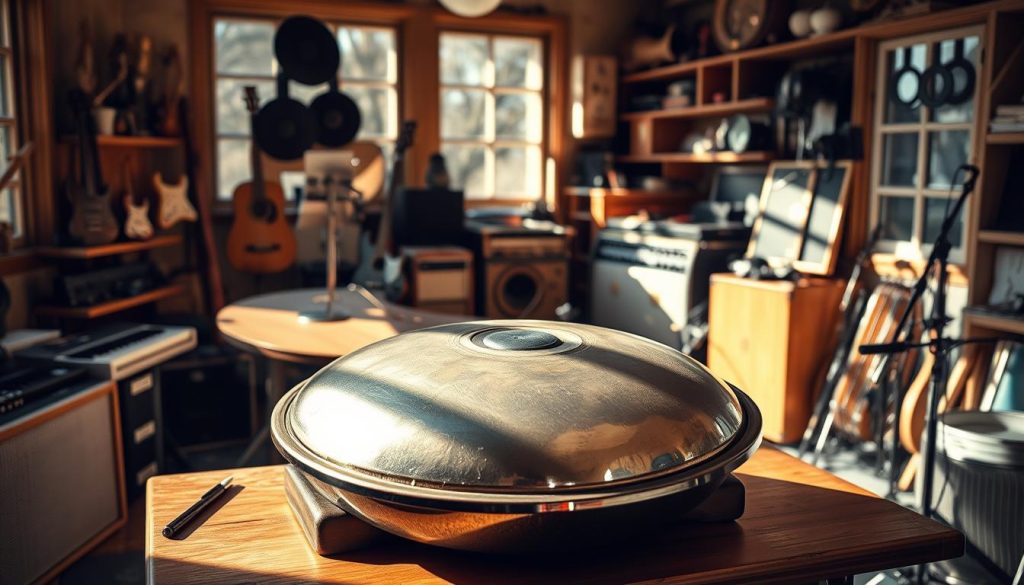
Purchasing a musical instrument such as a handpan can represent a significant investment. Choosing a used instrument from a maker or specialist dealer can reduce the cost while ensuring quality and reliability.
General-purpose platforms carry greater risks: no warranty, poor tuning, or scams. Choose professionals such as Instruments du Monde, which provide technical inspections and transparent legal information.
Although the average saving is 50% compared with buying new, this choice still requires caution. Our guide presents the essential advice for making your musical project secure.
Why choose a used handpan?
Reconditioned handpans are appealing because of their affordability and rapid availability. Whether you are a beginner or an experienced musician, this choice offers tangible benefits.
The financial advantages
The money saved is the primary benefit. According to experts, the average price of a used model is 50% lower than that of a new one. Some workshops, such as Metal Sounds, even offer discounts of up to 30%.
A practical example:
| Type | Average price | Lead time |
|---|---|---|
| New | €2,000 | 6 months |
| Used | €1,200 | 48 hours |
By choosing a used instrument, you also contribute to a circular economy by giving your instrument a second life.
Immediate availability
Unlike new models, which are often subject to long lead times, used models can be acquired quickly. One buyer says: “I found my ideal model in less than 48 hours.”.
Instruments in stock are inspected and ready to ship. You no longer need to wait months before you can start playing!
New or used handpan: the key differences
Choosing between a new handpan and a used model requires an understanding of their main differences. Sound quality, warranties, and risks vary depending on the instrument’s origin.
Warranties and after-sales service from a professional
Makers and authorized dealers offer undeniable advantages:
- Two-year statutory warranty against conformity defects
- After-sales service for retuning or repairs
- Certificate of authenticity and traceability
| Criterion | Professional | Private seller |
|---|---|---|
| Warranty | 2 years | None |
| Retuning included | Yes (42% of cases) | No |
“The market is being flooded with unrepairable Asian copies. Choose European workshops.”
Risks associated with buying used
Watch for signs of wear:
- Visible oxidation on the surface
- Altered resonance or out-of-tune notes
- Deep dents that compromise acoustic quality
Some models, such as first-generation Spacedrums, cannot be restored. Regular maintenance reduces these risks.
Essential criteria for choosing a used handpan
Choosing a good used handpan depends on precise criteria that ensure its longevity. Here are the key points to examine before buying.
Check sound quality and tuning
Sound quality is paramount. Use a chromatic tuner to test each note. Tuning tolerance should be ±1 Hz.
Signs of a problem:
- Uneven resonance between notes
- Vibration that fades too quickly
- Microcracks (detectable with a magnifying glass)
Inspect the overall condition (dents and rust)
A thorough physical inspection helps prevent unpleasant surprises. Here is a checklist:
| Element | What to check | Tools |
|---|---|---|
| Surface | Dents, scratches | UV lamp |
| Moisture level | Rust, oxidation | Moisture meter |
Avoid models with deep deformation. It impairs acoustic quality.
Choose recognized brands
Brands such as Pantheon Steel and Saraz offer better durability. According to the 2023 Metal Sounds study:
“Handpans from established makers retain 90% of their value after five years.”
Choose models supplied with a certificate of authenticity. This also makes resale easier.
Where can you find a reliable used handpan?
Several options are available for finding a reliable secondhand handpan. Professionals and certified platforms provide essential guarantees for buying with complete confidence.
Specialist shops in France
Businesses such as Djoliba Percussions (Toulouse) and Percussions du Monde (Paris) offer inspected instruments. Their advantages include:
- In-store acoustic testing
- Statutory warranties included
- Interactive maps of authorized dealers
Makers’ workshops offering trade-ins
Some makers, such as Metal Sounds, accept older models as trade-ins and recondition them. Their program offers:
- An additional 15% on the trade-in value
- A complete service (tuning and cleaning)
- A quality certificate
Secure online platforms
Choose websites such as Hangout.fr or Handpan.org. Their indicators of trustworthiness include:
- Transparent certification procedures
- Verified customer reviews
- Secure payments
“I resold my instrument through the FIPRA network in 48 hours, with a complete assessment.”
Pitfalls to avoid when buying
Buying a used instrument involves specific risks that must be anticipated. In 2023, the DGCCRF recorded 157 scams involving handpan sales. Here is how to identify them.
Common scams
Beware of sellers offering prices that seem too good to be true. Fraudulent techniques include:
- Manipulated videos (audio deepfakes imitating the sound)
- Substituting a different model when shipping
- Payments made outside secure platforms
A good used handpan always has clear traceability. Ask for a certificate of authenticity.
Models that cannot be restored
Some materials, such as Corten steel, deteriorate irreversibly. Signs to look for include:
- Deep oxidation
- Notes that remain out of tune despite repairs
- Dents that impair sound quality
“Damaged handpans cost 70% more to repair than to replace.”
Choose brands renowned for their durability. If in doubt, consult the blacklist of unrepairable materials.
How should you test a used handpan?
Testing a handpan before buying is crucial to ensuring its performance. Set aside at least 30 minutes to assess every detail. Here is a method proven by instrument makers.
Notes that must be checked
Use a chromatic tuner to measure each note. The D Kurd scale must use the reference frequency of 440 Hz.
| Note | Ideal frequency | Tolerance |
|---|---|---|
| D3 | 146.83 Hz | ±1 Hz |
| A3 | 220.00 Hz | ±0.5 Hz |
Tips for checking harmonics:
- Strike the center of each note lightly
- Listen to the resonance (at least eight seconds)
- Check that there are no unwanted noises
If possible, bring someone knowledgeable with you
The FESTO network provides certified advisers. An expert can identify invisible defects:
“Thanks to a mentor, I avoided a model with microcracks hidden under standard lighting.”
Recommended equipment for testing an instrument independently:
- Flashlight (for detecting scratches)
- Moisture meter (optimal value: 40–50%)
- Audio recorder for comparing sound qualities
To learn more about these techniques, consult this complete inspection guide.
Maintaining a used handpan
An instrument such as a handpan requires regular care to preserve its sound quality. With proper maintenance, it can last for years without losing its performance.
Cleaning and protection from moisture
Monthly cleaning is enough to preserve the surface. Use a microfiber cloth and suitable products:
- Avoid abrasive detergents
- Apply a dedicated oil (such as Ballistol)
- Dry the instrument immediately after using it outdoors
The table below compares the recommended forms of protection:
| Product | Frequency | Average price |
|---|---|---|
| Protective oil | Once a month | €15 |
| Humidity-controlled case | – | €90 |
For nitrided-steel models, consult this materials guide. They require extra care.
When should you consider retuning?
Professional retuning costs between €300 and €500. It becomes necessary if you notice:
- Resonance lasting less than six seconds
- Notes that remain out of tune despite maintenance
- An abnormal metallic sound
“A well-maintained handpan can remain in tune for five to seven years without major intervention.”
Find maintenance tips to extend the life of your instrument. An annual inspection by a specialist instrument maker is ideal.
Conclusion: making the right choice with confidence
Buyer satisfaction reaches 89% with expert assistance. The certified professional market grew by 37% in 2023, demonstrating increased confidence in these solutions.
Remember this key advice: choose authorized workshops, check sound quality, and use assessment tools. A good choice depends on a methodical approach.
To discover inspected models, visit Instruments du Monde. Its network of instrument makers ensures a transaction you can complete with confidence.