
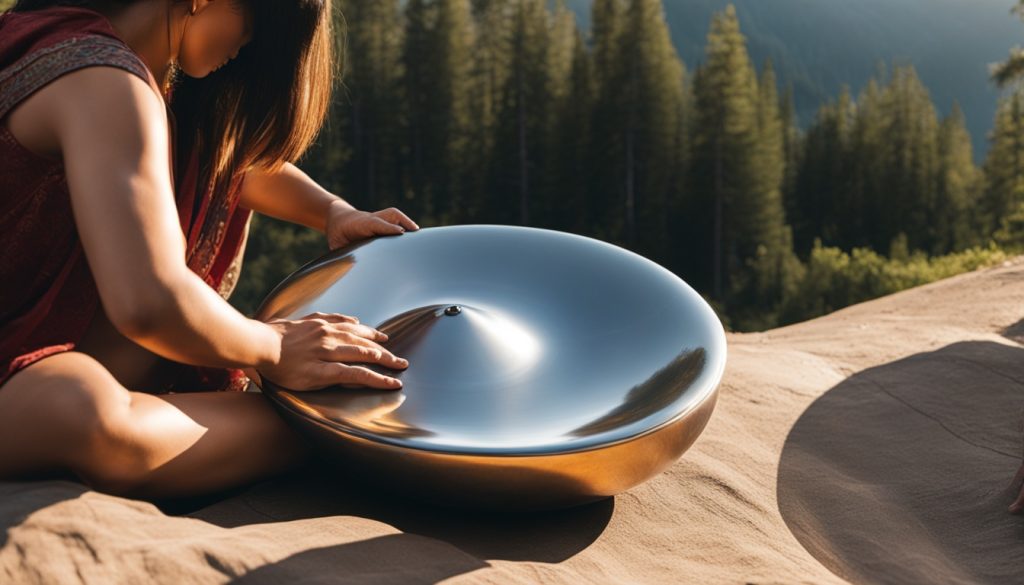
The handpan is a musical instrument that attracts many musicians and enthusiasts. Its unique sound and ease of learning make it a perfect choice for beginners. It stands apart from instruments that require years of practice. With the handpan, novices can easily begin playing and creating music.
Most handpans are tuned to 432 Hz, creating a distinctive sound experience. When learning, it is important to choose a model with sustain lasting 8 to 12 seconds. Beginners are often advised to start with a D minor scale, which is versatile and easy to learn.
If you would like to learn more about the handpan, introductory workshops are available. You can learn without needing to own an instrument. For more information about choosing your first handpan, read this Handpan France article.
What is a handpan?
The handpan is a unique musical instrument, often classified as a melodic percussion instrument. Its captivating sound draws many musicians and music lovers. To better understand this fascinating instrument, let us explore its origin and history as well as its characteristics.
Origin and history of the handpan
The handpan was created in 2001, when the Swiss maker PANArt developed this acoustic instrument inspired by the Hang instrument. The history of the handpan is marked by a strong emphasis on improvisation and great accessibility for musicians of all levels. Although it was still little known at first, the handpan quickly gained popularity in the music world, becoming a benchmark in melodic percussion.
Characteristics of the instrument
The handpan has several interesting characteristics. It generally measures between 45 and 60 centimeters in diameter. It usually has up to seven fundamental notes on its upper surface, each accompanied by three harmonics. The main handpan playing technique consists of striking it with the thumb, allowing for an intuitive and spontaneous approach. Since 2005, several generations of handpans have been produced on every continent, each offering a unique soundscape.
| Characteristics | Details |
|---|---|
| Size | Between 45 and 60 cm in diameter |
| Fundamental notes | Up to 7 |
| Harmonics per note | 3 |
| Year invented | 2001 |
| Year PANArt ceased production | 2013 |
| Playing technique | Striking with the thumb |
Benefits of playing the handpan
The handpan is highly valued for its many benefits. It is suitable for beginners and experienced musicians alike. This instrument is easy to learn, making the musical experience accessible to everyone.
Accessibility for beginners
The handpan is very accessible. No musical knowledge is needed to get started. Beginners can learn easily thanks to its melodious sounds and intuitive use.
Freedom of expression is paramount. The instrument’s simplicity allows anyone to begin making music.
Artistic expression and improvisation
The handpan is a unique form of artistic expression. It encourages improvisation, allowing everyone to discover their creativity. The notes are intimate and poetic, creating a variety of atmospheres.
Choosing the right chords can help you improve your craft. Handpan communities encourage collaborative sessions, thereby strengthening connections between musicians.
| Benefit | Description |
|---|---|
| Accessibility | Easy to learn with no musical prerequisites. |
| Artistic expression | Freedom to create and explore sounds personally. |
| Improvisation | Ability to play freely and innovate musically. |
| Therapeutic benefits | Used in music therapy to reduce stress and anxiety. |
How easy is it to learn the handpan?
The handpan attracts many musicians and enthusiasts because of its simplicity. It is easy to learn, even without prior musical training. This makes music accessible to everyone.
Intuitive learning with no prior musical training
The handpan is appealing because it lets you play music without knowing music theory. Beginners can quickly create sounds and rhythms. The instrument’s design helps players produce harmonious melodies without special training.
You can learn to play without taking handpan lessons. Everyone can experiment and improve their skills.
Available tools and resources
There are many online resources for those who want to deepen their learning. Websites such as Master The Handpan offer handpan lessons, videos, and forums. These tools help people learn and share their experiences.
Online resources allow learners to progress at their own pace. They are useful for everyone, whether beginner or experienced.
How do you get started with the handpan?
Starting to play the handpan is both exciting and a little intimidating for music lovers. However, the first steps are simple. The best way to begin is to play melodies and become familiar with the notes. By trying different rhythms, you can immerse yourself without pressure and learn naturally.
The first steps for beginners
Learning the handpan is a personal journey. Having fun and discovering its sounds are essential. Choosing a handpan that evokes emotion creates a unique connection. For those seeking lessons, the Master The Handpan platform offers progressive and motivating courses.
The importance of enjoyment in learning
The handpan is an instrument meant for enjoyment, not just performance. Enjoying the learning process is crucial for staying motivated and creative. Playing joyfully helps you discover new techniques and rhythms. This enriches your playing and encourages lasting practice.