
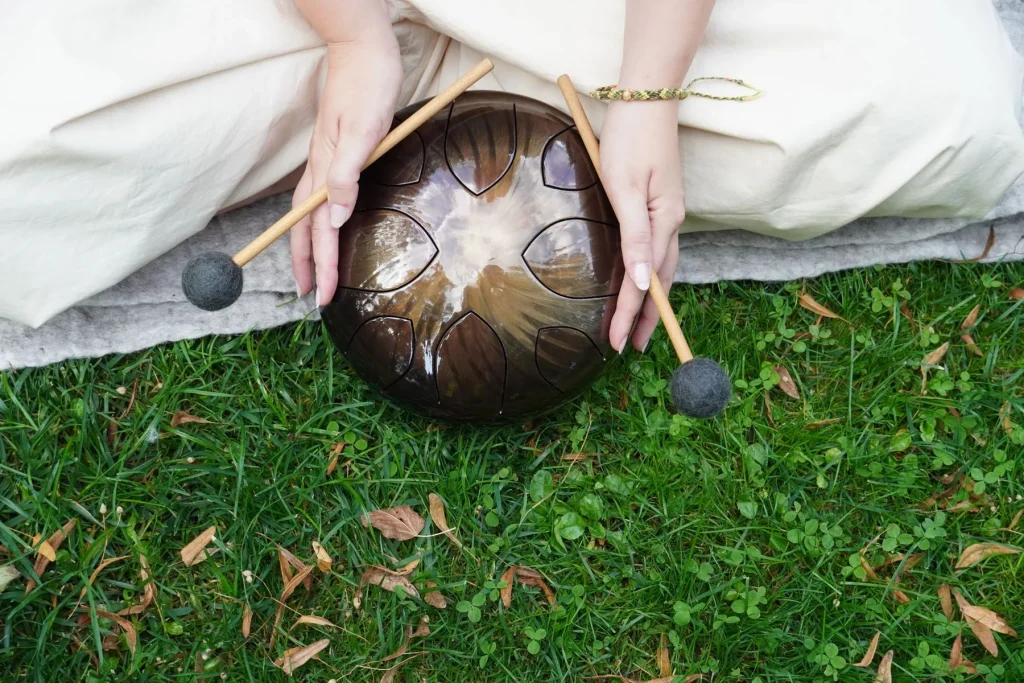
The world of percussion instruments offers extraordinary sounds. Among them, two models stand out for their design and captivating tone.
These recent creations appeal to artists seeking organic melodies. Their growing popularity can be explained by their versatility and ease of learning.
This guide will help you understand the differences between these two options. Technical criteria such as materials and tuning play a key role in your choice.
Renowned brands such as Meinl and Zenko offer high-quality models. To explore the different scales available, see our complete guide to scales.
Introduction to these unique instruments
The world of metal percussion has been enriched by two exceptional instruments. The first appeared in 2000, while the second is a more recent innovation. Their design marked a turning point in the world of harmonic sounds.
Their popularity is soaring in meditation circles and on stage. Artists and therapists love their ability to create captivating atmospheres. Their ease of play is as appealing as their sonic depth.
These instruments share remarkable acoustic characteristics: gentle metallic resonance and intuitive playability. Their floating notes invite improvisation and exploration.
In France, the market has grown by 25% since 2020, demonstrating increasing enthusiasm for these original creations. Enthusiasts seek sounds that are both rare and accessible.
“A beautiful sound worth waiting six years for.”
What is a handpan?
Between tradition and modernity, a unique musical creation emerged. The handpan fascinates with its crystalline sounds and distinctive shape. This instrument stands out for its meticulous craftsmanship and premium materials.
Origins and history of the handpan
In 2000, PANArt’s Felix Rohner and Sabrina Schärer invented the first model. Evolving from the Hang drum, it ushered in a new era of melodic percussion. During the early years, demand grew far beyond production capacity.
The wait for an instrument could reach 18 months. Today, makers such as Terré Moon offer improved versions. Preserving artisanal methods remains a challenge amid growing demand.
Main technical characteristics
The handpan is made from 1.2 mm-thick nitrided steel. Its diameter ranges from 50 to 55 cm, and it weighs between 5 and 7 kg. Every note is tuned by hand with extreme precision.
Sound quality depends on the tempering process and alloys used. The Terré Moon D Minor model, for example, offers perfect tuning at 440 Hz. The durability of the instrument relies on this outstanding artisanal expertise.
Despite some attempts at industrialization, production remains predominantly manual. This attention to every detail explains the incomparable acoustic quality of the finest models.
Introducing the RAV Vast
In the melodic percussion family, a recent innovation is attracting attention. The RAV Vast stands out for its technological approach and accessibility. This instrument pushes the boundaries of metallic sound.
Development and distinctive features
The brand revolutionized the sector with its single-piece shell. Hydroforming technology ensures unparalleled acoustic precision. This process distributes vibrations evenly.
Integrated resonators extend sustain for up to 15 seconds. Its reduced weight of 4.9 kg makes it easier to carry. Its ergonomics are designed for long playing sessions.
“The RAV VAST DRUM D MAJOR turns beginners into virtuosos.”
Evolution of RAV models
The current range includes nine models with varied sounds. Models such as the Celtic Minor and Pygmy offer different tonal palettes. Each creation meets specific musical needs.
Successive improvements have focused on:
- Tuning stability
- Harmonic richness
- Material durability
| Model | Weight | Sustain | Warranty |
|---|---|---|---|
| G Pygmy | 4.9 kg | 14 sec. | 3 years |
| Celtic Minor | 5.2 kg | 15 sec. | 3 years |
| D Major | 5.1 kg | 13 sec. | 3 years |
To discover the complete range, visit our specialist partner’s selection of RAV Vast models. A wise investment for anyone seeking quality and innovation.
Sound comparison
Every metal percussion instrument has its own sonic signature. These instruments create distinct atmospheres that shape the listening experience. Sound quality depends on numerous technical and artistic factors.
Handpan timbre and resonance
The first model produces warm, organic notes. Its average sustain of 12 seconds creates an enveloping atmosphere. Its rich harmonics, with five to seven per note, add depth.
Ideal for meditation, it offers a gentle, circular sound. Players appreciate its ability to create complex soundscapes. It blends perfectly with world music.
RAV Vast sound quality
This modern model surprises listeners with its powerful projection. With 18 seconds of sustain, its notes seem to float in the air. Its sound quality is more direct and percussive.
According to a Thomann study, 78% of users prefer its timbre. Its three to four harmonics per note provide exceptional clarity. Its stability makes it ideal for outdoor recordings.
Audible differences
The first notable difference concerns note duration. The RAV clearly dominates with its extended sustain. The handpan, meanwhile, provides more harmonic nuance.
Acoustics expert Jean-Pierre Fontaine confirms:
“The RAV projects better in concert, while the more intimate handpan is suited to small spaces.”
For players, this difference influences musical style. Comparative demonstrations are available from Handpan France. Ultimately, the choice depends on personal preference.
Construction and materials
The manufacture of these percussion instruments reveals two distinct approaches. One prioritizes artisanal expertise, while the other relies on technological innovation. These methods directly affect the sound quality and durability of each instrument.
The craftsmanship behind the first model
Each instrument requires at least 40 hours of manual work. Precise hammering creates notes of exceptional purity. Premium materials, such as nitrided steel, ensure deep resonance.
The process includes:
- Cutting and shaping the shell
- Hammering each note individually
- Meticulous hand tuning
This method explains the high price and delivery times. It is an investment justified by unparalleled acoustic quality.
Innovation supporting the second model
CNC technology enables millimeter-level precision. An anticorrosion treatment extends its service life to 15 years. The patented Hydrophone coating optimizes sound projection.
“Our machining process reduces variation between instruments while preserving their soul.”
Key advantages:
- Resistance to 200 kg of pressure
- 85% recycled metal
- Simplified maintenance
| Aspect | Artisanal model | Industrial model |
|---|---|---|
| Manufacturing time | More than 40 hours | 8 hours |
| Durability | 10 years | 15 years |
| Maintenance | Monthly oiling | Dry cleaning |
To learn more about manufacturing techniques, explore our complete guide to metal percussion.
Scales and tuning
Exploring musical possibilities begins with choosing a scale. These instruments offer varied configurations suited to different styles. Their tuning directly affects expressiveness and the emotions conveyed.
Available standard configurations
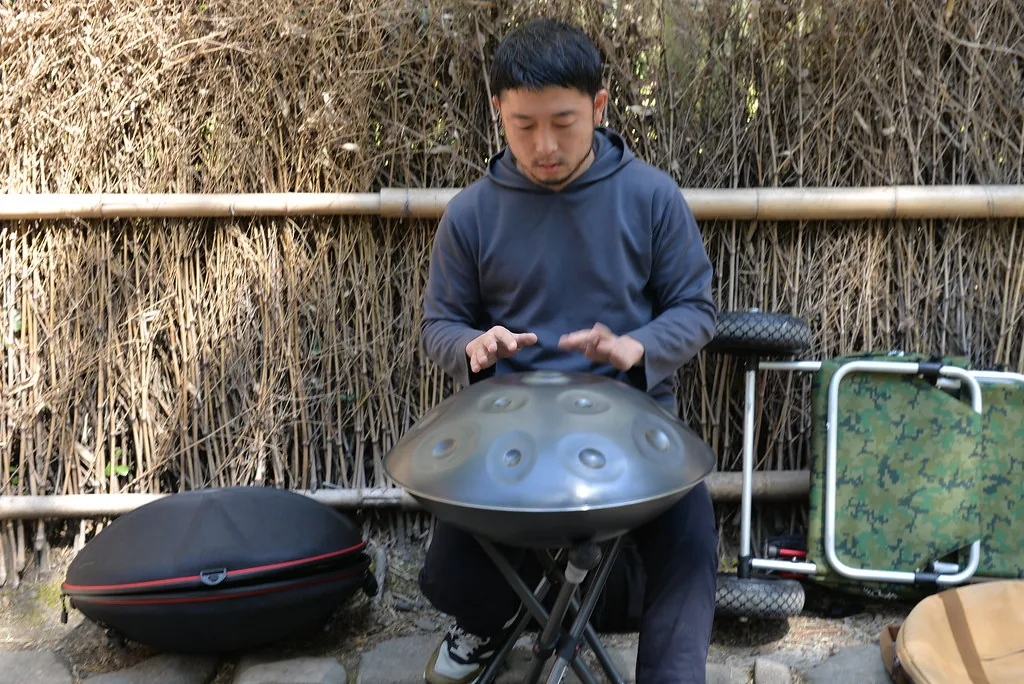
The first model offers between eight and 17 notes, depending on the maker. Kurd, Pygmy, and Celtic are among the most popular scales. Each configuration creates a unique atmosphere, from meditative to festive.
The second instrument retains nine fixed notes to ensure acoustic consistency. Its modular system allows plates to be exchanged to vary the keys. It is a practical solution for those who enjoy experimenting.
Customization and adaptations
According to instrument makers, custom tuning requires three acoustic trials. “Every unique instrument requires attentive listening,” explains a Lyon-based artisan. Radical alterations remain technically impossible after manufacture.
Lead times and costs vary significantly:
- A six-month wait and €300 for the first model
- Two weeks and €150 for the second
| Criterion | Artisanal option | Modular solution |
|---|---|---|
| Number of notes | 8 to 17 | 9 fixed |
| Retuning cost | €300 | €150 |
| Flexibility | Limited | Interchangeable plates |
The beginner pack includes standard tuning and tutorials. It is an ideal feature for getting started without investing in advanced options. The overall price will ultimately depend on your musical ambitions.
Ease of learning
Starting a new instrument can seem intimidating. Yet these percussion instruments offer an accessible approach for beginners. Their intuitive design greatly reduces the time needed to produce harmonious melodies.
Accessibility for new players
The RAV Vast stands out for its carefully designed ergonomics. Its evenly distributed weight makes it feel natural to hold. According to a Handpan Academy study, 90% of users master the basics in under 20 hours.
Amateur musician Rachel Rivière says:
“The RAV won me over in just 48 hours. Its color system guides those first steps perfectly.”
The main advantages include:
- Dedicated apps with progress tracking
- A discovery pack featuring video lessons
- Stable tuning requiring fewer corrections
Comparing progress between models
The Zenko Method shows 30% faster progress with tongue drums. This is explained by:
| Criterion | Traditional model | Technological innovation |
|---|---|---|
| Dropout rate | 25% | 15% |
| Hours needed to master the basics | 30 hours | 20 hours |
| Learning aid | Tablature | Visual system |
The D Celtic Minor is particularly recommended for its accessibility. This model, which is truly easy to learn, often serves as an introduction before moving on to more complex instruments.
The time investment varies according to the chosen instrument. Players seeking quick results will prefer modern solutions. Each option offers specific strengths for different learner profiles.
Musical versatility
These instruments offer varied sonic worlds suited to different practices. Their design directly influences the musical styles they can accompany. Their creative possibilities are worth exploring.
Exploring different repertoires
The first model excels in meditative atmospheres and world music. Its maximum recommended studio tempo is 120 BPM. Recordings often require several microphones to capture every nuance.
The second instrument shines in electroacoustic compositions. Björk incorporated it into her latest album, demonstrating its modern potential. The optional MIDI output opens up endless possibilities with effects pedals.
Practical uses and innovations
Professionals take advantage of these differences according to their needs:
- Sound design for video games
- Sound therapy
- Hybrid live performances
A community project brings together 150 players online. This initiative demonstrates how the two approaches complement each other. Every technical aspect influences the final result.
| Criterion | Traditional use | Technological innovations |
|---|---|---|
| Maximum BPM | 120 | Unlimited |
| Connectivity | Acoustic | MIDI and effects |
| Collaborations | World-music artists | Björk (2022) |
Your choice will depend on your artistic vision. These instruments transcend categories to create unique music. Their versatility appeals to amateurs and professionals alike.
Maintenance and durability
Caring for an instrument preserves its longevity and sound quality. Regular maintenance prevents oxidation and preserves its harmonics. Methods vary according to the materials and construction.
Comparison of preservation procedures
The first model requires weekly cleaning with a microfiber cloth. Monthly oiling protects the nitrided steel. An annual budget of €50 covers specialized products.
The second instrument only requires monthly maintenance. Its Hydrophone coating is more resistant to humidity. Costs fall to €25 per year to preserve its quality.
- Hygrometric case recommended, with a maximum of 80% RH
- Average repair cost: €200 per note
- Controlled oxidation process
Resistance to extreme conditions
A study conducted over five years shows marked differences. The artisanal model develops a protective patina. The industrial option better withstands climatic shocks.
“My RAV survived three festivals in the rain without any change in sound.”
| Criterion | Traditional maintenance | Technological solution |
|---|---|---|
| Cleaning frequency | Weekly | Monthly |
| Annual cost | €50 | €25 |
| Humidity guarantee | 80% RH | 100% RH |
Handpan Cocorico offers suitable insurance policies. This comprehensive protection preserves your investment over the long term. Acoustic quality remains intact thanks to these precautions.
Price and investment
An instrument’s value is measured far beyond its purchase price. The total investment includes maintenance, durability, and musical potential.
Price ranges by model
The market offers options for different budgets. Price differences reflect manufacturing methods and materials.
| Category | First model | Second model |
|---|---|---|
| Entry level | €900 to €1,500 | €600 to €1,200 |
| Mid-range | €2,000 to €3,500 | €1,500 to €2,500 |
| High-end | Up to €6,000 | €3,500 maximum |
Value-for-money analysis
Several factors affect the return on investment:
- Five-year cost: 40% lower for the second model
- Depreciation on the secondhand market: 20% versus 35%
- Included accessories, such as cases and mallets
“My €700 Muslady remains my best purchase after three years of intensive use.”
Financing options make these instruments more accessible. Thomann, for example, offers payment in three interest-free installments. One study reports a satisfaction score of 8.2 out of 10, compared with 7.5 for traditional options.
Acoustic quality often justifies the price differences. Artisans explain their pricing by the hours of work required. Every musician must find the right balance between budget and aspirations.
Buying guide: how should you choose?
Given the variety of available options, making an informed decision is essential. This guide reveals the determining criteria for your musical choice. Experts share their practical advice.
Essential selection criteria
According to instrument makers, these are the five elements to prioritize:
- Weight: between 4 and 7 kg, depending on your mobility needs
- Tuning: note stability and precision
- Sustain: resonance lasting from 12 to 18 seconds
- Finish: quality of materials and treatment
- Warranty: a minimum of two years recommended
“The RAV Vast G Pygmy offers the best value for money this year, with its nine perfectly balanced notes.”
| Criterion | Priority for a beginner | Priority for a professional |
|---|---|---|
| Weight | ★★★★★ | ★★★ |
| Tuning | ★★★ | ★★★★★ |
| Delivery time | 48 hours | 6 months |
Recommendations by player profile
For online purchases, choose certified brands:
- Artisan d’Art certification for Métal Sounds
- Extended warranty of at least three years
- Partner showrooms in France
Avoid these common mistakes:
- Overlooking physical ergonomics
- Forgetting to budget for accessories
- Comparing different ranges
Our 10-point purchasing checklist:
- Mandatory hands-on trial
- Harmonic verification
- Certificate of authenticity
- Return conditions
- Local after-sales service
The Sound’Optique network offers free trials. Take advantage of this service to validate your choice under real-world conditions.
Conclusion: which instrument should you choose?
Two musical approaches are open to you, each with its own distinctive features. The first instrument appeals through traditional craftsmanship, while the second stands out through technological innovation. Your choice will depend on your playing style and creative goals.
For meditative moments, favor harmonic richness. Traveling musicians will appreciate robustness and light weight. Sound quality remains exceptional in both cases.
The future will probably bring some interesting hybrids. In the meantime, always try before you buy. A good musical investment begins with a sensory experience.
Online master classes are available if you want to deepen your knowledge. They will help you make the right choice between these unique instruments.