
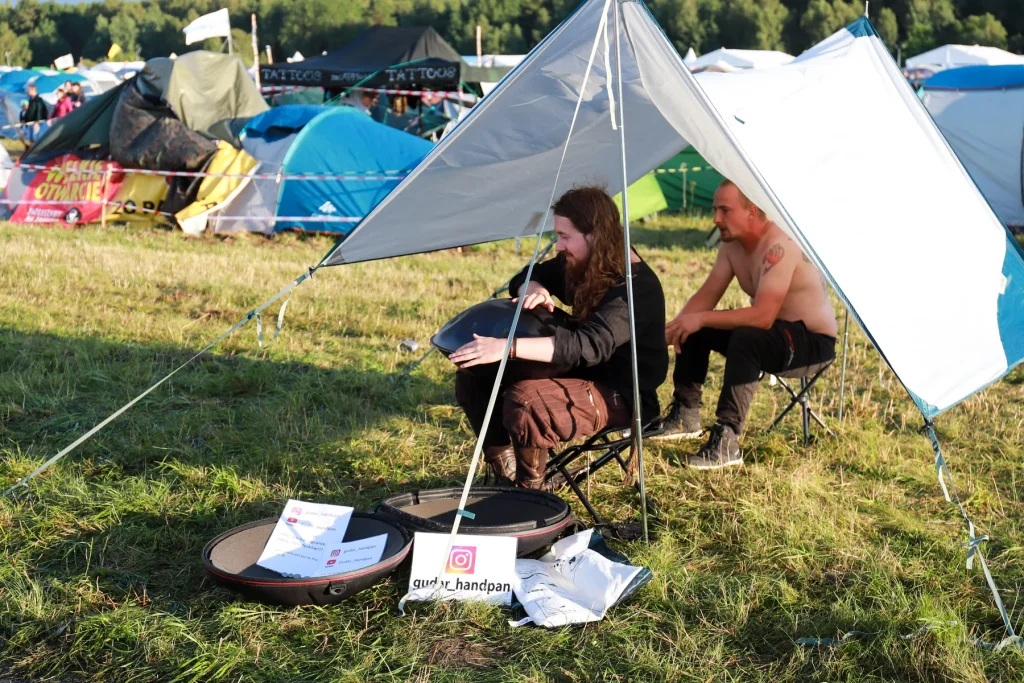
The handpan is a unique instrument that combines melody and percussion. Learning it becomes more accessible with numbered notation, which simplifies reading even if you have no knowledge of music theory.
These numerical systems allow you to structure your playing progressively. Each number corresponds to a specific note on the instrument, while symbols indicate rhythms and rests.
This comprehensive guide will explain how to interpret these elements. You will then be able to play a variety of pieces, from original compositions to adapted covers.
The method is also suitable for steel tongue drums, which are related to the handpan. To explore the subject further, see our detailed resource on tablature.
Introduction to the handpan and its sheet music
Discovering this melodic instrument opens the door to a captivating world of sound. With its saucer shape and harmonious notes, the handpan is as appealing for its design as for its enchanting music.
What is a handpan?
Created around twenty years ago, this instrument evolved from the Hang drum. It consists of a central apex surrounded by 8 to 9 precisely tuned notes.
The nitrided steel used to make it provides exceptional resonance. Each strike produces rich vibrations, creating a unique atmosphere.
Why use numbered sheet music?
Unlike traditional music notation, this simplified system uses numbers corresponding to the notes. This method offers several advantages:
- Faster learning for beginners
- Better memorization of melodies
- Optimal rhythmic accuracy
An experienced musician explains:
“After five years of practice, numbered sheet music allowed me to progress more quickly than traditional methods.”
To explore practical examples, see our selection of steel tongue drum sheet music, for an instrument related to the handpan.
This visual approach makes it easier to move on to more complex compositions. It is an ideal gateway into the world of melodic percussion.
The basics of numbered handpan sheet music
Mastering numbered sheet music opens up new musical possibilities. This number-based system is ideal for getting started quickly.
Understanding numbers and their corresponding notes
Each number represents a specific note on the handpan. Here is the standard correspondence:
| Number | Note (solfège system) | Position on the instrument |
|---|---|---|
| 1 | Do | Central apex |
| 2 | Re | Upper-left ding |
| 3 | Mi | Upper-right ding |
| 4 | Fa | Lower-left ding |
| 5 | Sol | Lower-right ding |
| 6 | La | Peripheral note 1 |
| 7 | Ti | Peripheral note 2 |
Octaves are indicated by dots: a dot above the number raises it by one octave, while a dot below lowers it by one octave.
Letter notation versus numbered notation
Unlike letter notation (C = do, D = re), numbers prevent confusion. NMCA (Arabic numeral musical notation) standardizes this method.
Conversion example:
- “C-D-E” (letter notation) becomes “1-2-3.”
- Hybrid scores sometimes combine both systems to make the transition easier.
“NMCA allowed me to play my first melodies within a few hours, without knowing music theory.”
For practice, try converting a simple pattern such as “1-3-5” into letters (C-E-G).
How to read numbered handpan sheet music step by step
Reading numerical notation follows a logic that is accessible to everyone. By breaking down each element, you will gain fluency and accuracy.
Deciphering the notes and their positions on the instrument
Mentally associate the numbers with the striking areas. One effective method is to highlight notes in different colors for fast sequences.
Example using “Frère Jacques” (1-2-3-1):
- 1 (do): center of the apex
- 2 (re): upper-left ding
- 3 (mi): upper-right ding
Interpreting duration symbols
Dashes, dots and slashes change the duration of notes. Here are their values:
| Symbol | Effect | Example (beats) |
|---|---|---|
| Dash (—) | Doubles the duration | 1— = 2 beats |
| Dot (.) | Adds 50% | 1. = 1.5 beats |
| Slash (/) | Divides by 4 | 1/ = 0.25 beats |
“A metronome set to 120 BPM helped me observe these values. At first, I counted aloud.”
Practice with a three-beat phrase (e.g. 1—3). Coordination between the left and right hands improves naturally with these visual cues.
Differences between sheet music and visual tablature
Musicians often use two methods to play the handpan: numbered sheet music and visual tablature. Each system meets different needs depending on the player’s level and goals.
Advantages of numbered sheet music for accuracy
Sheet music provides clear notation for notes and rhythms. It is ideal for complex pieces, such as those by David Charrier, where every detail matters.
Its main benefits include:
- Rhythmic accuracy through standardized symbols
- Easy adaptation to tempo changes
- Better memorization of sequences
“After trying both, sheet music allowed me to play advanced compositions without mistakes.”
When should you use tablature?
Tablature, which is often color-coded, is suitable for beginners. It makes strikes easier to visualize but offers less rhythmic precision.
Recommended uses:
- Learning your first melodies
- Free practice without a rigid structure
- Children or a playful approach
| Criterion | Sheet music | Tablature |
|---|---|---|
| Accuracy | High | Moderate |
| Adaptability | All levels | Beginners |
| Complexity | Advanced compositions | Simple pieces |
To move on to sheet music, begin with short melodies. Laminate your materials to make them more durable during practice sessions.
Practical examples of numbered sheet music
Practicing with concrete examples helps you master the handpan faster. Familiar melodies allow you to apply the theory immediately.
Decoding “Happy Birthday”
This famous melody uses six main notes. Here is its numbered structure:
- Bar 1: 1-1-2-1-4-3
- Bar 2: 1-1-2-1-5-4
- Repeat with rhythmic variations (1.—3)
Notes played simultaneously are written in parentheses. Here are some common combinations:
| Notation | Notes played | Sound |
|---|---|---|
| (16) | Do + La | Joyful harmony |
| (35) | Mi + Sol | Major chord |
| (24) | Re + Fa | Melancholic tone |
Advanced sheet music with expressive markings
A professional composition incorporates rests and tempo changes. Consider this excerpt:
- Bar 5: 2-4-(16)-0 (0 = rest)
- “accel.” marking before bar 7
- Dynamics: p (piano) / f (forte)
Rests create suspense. A dynamic tempo adds emotion. To improve:
“Play slowly at first, carefully observing every rest. Increase the speed gradually.”
Playing techniques for applying sheet music
Improving your handpan playing requires mastering specific techniques. These methods turn numbers into flowing melodies, even in complex pieces.
Coordination between the left and right hands
Hand independence is crucial. Begin with simple exercises:
- Strike alternately with each hand (1-2-1-2)
- Add rests to work on accuracy
- Use finger guards to prevent friction
Good finger positioning optimizes the steel’s natural rebound. The shadow-playing method (playing without touching the instrument) helps you memorize positions.
“Practicing slowly with a metronome improved my synchronization within a few weeks.”
Managing fast sequences
Fast note sequences require practice. Here is how to master them:
- Break passages down into three-note segments
- Increase the tempo gradually
- Practice with mallets to vary the textures
Sequences become natural through daily exercises. One effective exercise is to play a scale (1-2-3-4-5) while alternating hands.
For complex rhythms, isolate the dominant hand first. Then add the other hand one note at a time.
Tools and resources for improving
Access to the right tools transforms the process of learning the handpan. From specialized software to online libraries, these resources accelerate your progress.
Creating your own sheet music with Notepan
Notepan is free software designed for melodic instruments. Its features simplify the creation of sheet music adapted to your scale.
Main benefits:
- Intuitive drag-and-drop editor
- Built-in sound library for checking your work
- Export to PDF and steel-tongue-compatible formats
To get started:
- Set the tempo to suit your level
- Add notes using the virtual keyboard
- Use the audio preview to check the result
“Notepan allowed me to compose my first melody in 30 minutes. Exporting it to my tablet is perfect for rehearsals.”
Free sheet-music platforms
Several websites offer free sheet music for every level. Here is a comparison of the best sources:
| Platform | Special features | Format |
|---|---|---|
| Instruments du Monde | Sorted by difficulty | PDF + audio |
| Handpan Academy | Video tutorials included | Interactive |
| Variety of styles | Images |
Tips for choosing well:
- Check compatibility with your tuning
- Prefer files that include rhythmic annotations
- Choose online courses that include exercises
English-language resources are becoming increasingly common. Some of the most comprehensive include:
- Sonodrum’s media library
- Hang Massive’s educational packs
- The collaborative Steel Tongue FR archives
Common mistakes and tips for avoiding them
Identifying common pitfalls helps you progress faster. Even with a good method, beginners frequently repeat certain mistakes.
Failing to distinguish octaves
Dots placed around numbers change the octave. A common mistake is to play every note at the same pitch.
Practical solution:
- Highlight low notes in blue (dot below)
- Use red for high notes (dot above)
- Circle standard notes
“I noticed that 70% of wrong notes came from misreading octaves. Color coding changed everything.”
Misinterpreting durations
Note-duration symbols affect the rhythm. A missing dash or misplaced dot disrupts the melody’s structure.
Effective method:
- Count “1-and-2-and” for quarter notes
- Say “ap-ple” for dotted notes
- Tap the tempo with your foot
Record yourself, then compare your performance with the original score. Differences become obvious when you listen back.
Checklist before playing
Here are five points to check every time:
- Instrument tuning
- Position of octave dots
- Duration symbols
- Indicated rests
- Dynamic markings
These simple tips will help you avoid 90% of common problems. The important thing is to remain patient and methodical.
Conclusion: mastering the art of the handpan with numbered sheet music
Learning with numerical notation enables fast and rewarding progress. Within a few weeks, you will develop a keen musical ear and natural coordination.
As Mathieu, a self-taught player who became a professional, explains: “These methods allowed me to compose my first pieces in just three months.” His journey is an encouragement to persevere.
The next step? Express your creativity by creating your own melodies. Then share them with the growing community of enthusiasts.
To continue learning, download our starter kit, which includes:
- 5 beginner-friendly scores
- An explanatory audio guide
- Access to an interactive webinar
This unique instrument will quickly become an everyday musical companion. Now it is your turn to play and explore all its possibilities!