
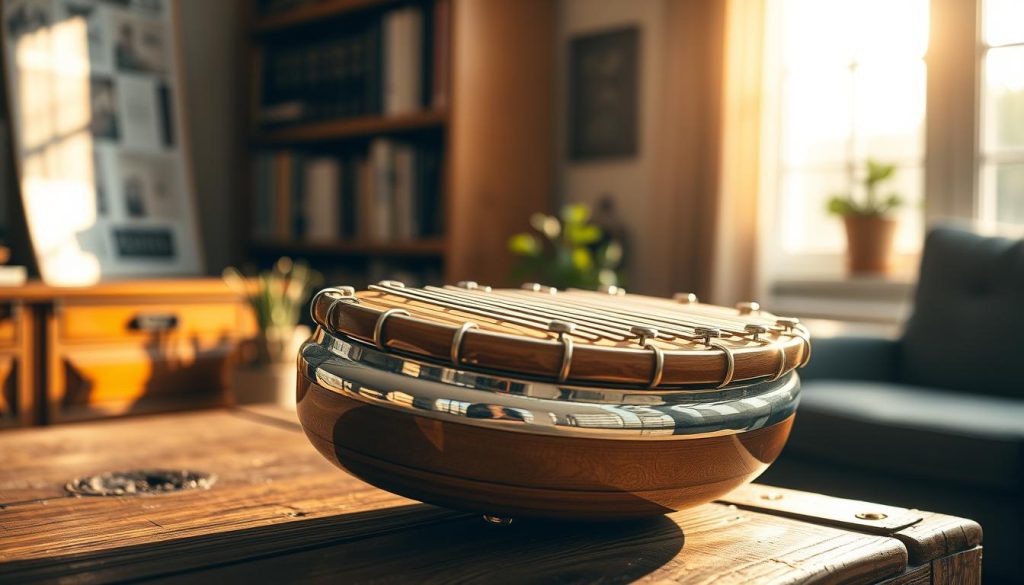
Are you considering buying a tongue drum for meditation or yoga? This concise guide will help you understand prices and the value of making a sound investment.
The world of percussion includes a wide variety of instruments. Prices range from a few dozen euros to more than €800, depending on quality and materials.
Comparing models online makes choosing easier. Examine the finish, sound and durability before buying.
This instrument offers rich tones suitable for both personal practice and group sessions. A good instrument lasts a long time and stays in tune.
Later in the article, you will find price ranges and practical advice for selecting a model suited to your budget and needs.
Understanding tongue drum prices: how much should you budget?
First appearing in the 1990s and then popularized in 2007, this instrument changed the approach to melodic percussion. Dennis Havlena popularized its modern form by drawing inspiration from the Hang, while Jim Doble laid important foundations with the Whale Drum.
This type of percussion instrument is characterized by tongue-shaped cutouts that produce different sounds depending on how hard they are struck. The number of notes directly affects the range of melodies that can be played.
To assess the price properly, first consider how it will be used: meditation, musical creation or performance. The quality of the materials and tuning determines the instrument’s longevity and richness of sound.
“A quality instrument turns every session into a moment of relaxation and creativity.”
- Origins and development: historical significance (1990, 2007).
- Features: cutouts, number of notes, tuning.
- Use: meditation or complex melodies.
| Criterion | Impact on cost | Consequence for the user |
|---|---|---|
| Number of notes | Higher number → higher price | More possible melodies |
| Materials | Worked metal → higher cost | Better resonance and greater durability |
| Tuning quality | Precise tuning → higher price | Stable, harmonious sounds |
To explore models suited to your budget and intended use, read our buying guide and discover reliable offers to buy a tongue drum.
The key factors determining the cost of your instrument
The final cost depends mainly on manufacturing and finishing choices. Several technical factors explain why an affordable model sounds different from a high-end instrument.
Manufacturing materials
Materials play a major role. Stainless steel, used by brands such as Metal Sounds, improves durability and appearance. It also optimizes resonance and harmonic richness.
Size also has an impact: a model measuring less than 10 centimeters often costs under €30, while a 40-centimeter instrument costs more than €300.
Sound quality and tuning
Tuning accuracy determines the sound quality. Careful adjustment justifies a higher price because it ensures stable notes and a better musical range.
Included accessories, such as a non-slip stand, increase the value of the purchase and playing comfort. To compare the technical differences and choose a good model, read a detailed comparison or a useful glossary.
Analysis of price ranges by quality
From children’s models to custom-made instruments, prices vary according to finish and tuning. Instruments for beginners start at €59 and are ideal for children and first-time players.
Beyond that, mid-range models offer more notes and better sound quality. The number of notes expands the range and makes it possible to play a wider variety of sheet music.
Beginner or professional models
Starting at €500, instruments enter the professional category. These models use high-end materials, often steel, and benefit from extremely precise tuning.
Professionals benefit from custom options and tonal stability that justify the cost. Buying online makes it easier to compare brands and product ranges before making a final choice.
- €59: introductory model suitable for children.
- Mid-range: more notes and better finishes.
- ≥ €500: professional models with superior tuning and materials.
Comparison of available brands and ranges
Some brands stand out for the consistency of their manufacturing and their recognizable sound. Hluru, for example, offers 9-note models in D minor, often priced at around €299.00 with a copper-colored finish.
Instruments du Monde offers an exceptionally wide selection: more than 100 models in stock, including 15-note options in C major. This extensive catalog makes it easier to choose according to intended use.
Size affects resonance. Instruments measuring 35 cm are often recommended for achieving ideal tonal depth for meditation or more sustained musical practice.
Accessories such as mallets and cases protect the instrument and improve playability. Recognized brands guarantee consistent quality and make learning from sheet music easier.
| Brand | Strengths | Example |
|---|---|---|
| Hluru | Copper-colored finish, 9 notes | D minor ≈ €299.00 |
| Instruments du Monde | Wide range, 15 notes in C major | More than 100 models available |
| Other brands | Various sizes and types of steel, diverse sounds | 35 cm models recommended |
“Each model offers a unique sound shaped by the steel and the precision of its tongues.”
This comparison guide will help you identify the right range, whether for meditative practice or playing more complex sheet music.
Choosing between buying online and in a physical store
Choosing between an online purchase and a visit to a store requires balancing your budget with the buying experience. Both options offer clear advantages depending on your priorities: savings or convenience.
Advantages of ordering online
Online retailers often offer lower prices thanks to their sales volume. They provide a vast selection of models and brands that can be compared quickly.
You can read reviews, check note specifications and filter products by size or sound quality before buying. Specialist platforms often provide guides and advice to inform your choice.
Advantages of trying an instrument in a store
In a store, testing an instrument lets you assess its resonance and tuning. Direct contact helps you confirm whether its size and ergonomics suit your playing style.
In-store experts offer personalized advice and help you choose the right model. Remember to check the return policy if you prefer to order online after trying an instrument.
- Online: broad selection, easy comparisons and often more attractive prices.
- In a store: sound testing, expert advice and a hands-on experience.
- Before buying, always check the return policy and warranty.
- Specialist websites such as Instruments du Monde often provide valuable advice to guide your choice.
How the number of notes and size affect your budget
The number of notes and the instrument’s size directly influence your investment. These two criteria determine its tonal range and manufacturing complexity.
Why the number of notes affects the price
A 15-note instrument can play complete arrangements such as “The Sound of Silence.”
Models with 6–8 notes remain ideal for beginners and cost less.
The importance of size for resonance
Diameters over 35 cm provide a larger sound chamber and deep resonance.
Larger versions, often made of steel, project sound more effectively during meditation sessions and in open spaces.
Choosing the right musical scale
Choose major scales if you want to play cheerful melodies accessible to players of all levels.
- Number of notes → more musical possibilities.
- Size → greater richness and better resonance for meditative playing.
- Accessories: a non-slip stand stabilizes the instrument during intensive sessions.
- Children’s models: smaller and easy to handle while retaining rich sound.
Advice for optimizing your musical investment
Investing in an instrument requires you to define your tonal priorities and budget.
Recommended budget: aim for €200–€300 to obtain a balanced instrument with professional tuning and durable materials.
Tuning: choose 432 Hz for peaceful relaxation. Choose 440 Hz if you play in a group and want to follow the standard reference pitch.
Accessories matter. A sturdy case, quality mallets and a stand will protect your purchase and extend its useful life.
- Favor steel models for better resonance and greater longevity.
- Major scales are ideal for beginners: simple melodies and immediate enjoyment.
- Before buying, compare brands and check the tuning and number of notes.
| Criterion | Why it matters | Recommendation |
|---|---|---|
| Price | Determines the quality of the materials and tuning | €200–€300 for good value for money |
| Number of notes | Affects the melodic range | 6–9 notes for beginners, 15 or more for complex pieces |
| Materials | Affect tone and resonance | Treated steel for a stable sound |
Conclusion
In summary, assessing your musical needs makes the final choice much easier.
Consider the number of notes, size and quality to achieve good value for money. A well-tuned instrument is suitable for both meditation and musical creation.
Before buying, compare brands, test instruments in a store or consult a reliable guide. To help you get started, read our article answering the following question: which tongue drum should a beginner choose?.
A carefully considered purchase ensures excellent value for money and will make your tongue drum a faithful companion as you progress with confidence.