
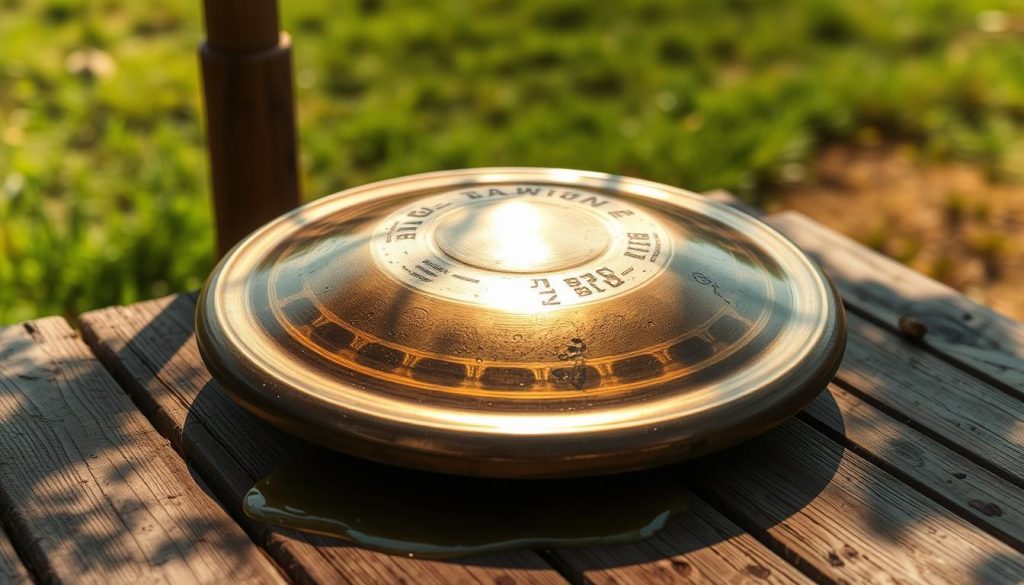
Taking care of your instrument is essential to preserve its sound and lifespan. The handpan, with its steel structure, requires special attention, particularly when the climate changes.
Choosing between two natural options can affect the durability of the instrument. Some materials, such as nitrided steel, react differently depending on the product used. Recommendations from manufacturers such as Shellopan can guide you toward suitable solutions.
The environment and use also play a role. Humid or salty areas require additional precautions. Solutions such as beeswax or Ballistol can complement handpan maintenance.
Beware of common mistakes: avoid lubricants that are too thick or unsuitable. Poor practices can irreversibly damage the surface of the instrument.
Introduction to handpan maintenance
Protecting your handpan from moisture extends its lifespan. This metal instrument is sensitive to climatic variations and hand marks. A suitable handpan maintenance routine prevents corrosion and maintains sound quality.
Why oil is essential for your instrument
Oil forms a protective barrier against moisture. Sweaty hands or a marine environment accelerate oxidation. Manufacturers such as Shellopan recommend regular treatment to prevent damage.
Street musicians and those who play by the sea must remain vigilant. Daily handpan maintenance is sometimes necessary. Temperature also affects how often the oil should be applied.
Special characteristics of nitrided-steel and stainless-steel handpans
Nitrided steel, used in 70% of Shellopan models, is durable but susceptible to isolated rust spots. Stainless steel develops a natural patina, but perspiration marks can discolor it.
| Characteristic | Nitrided steel | Stainless steel |
|---|---|---|
| Corrosion resistance | Moderate (requires oil) | High (natural patina) |
| Maintenance | Frequent (moisture) | Occasional (perspiration) |
| Recommended use | Indoors/dry climate | Outdoors/moderate humidity |
Store your instrument on a wall hook or in a partially open bag. An annual tuning check is recommended for both materials.
Olive oil or coconut oil: a technical comparison
Handpan owners have two natural options for regular maintenance. Each product has specific characteristics suited to different needs.
Characteristics of the traditional plant-based option
This natural solution penetrates the micropores of the steel effectively. Its medium viscosity (12 to 15 cSt) allows residue-free application.
Acoustic quality remains stable after application. However, according to Shellopan, the oil may turn rancid after six months of use.
Benefits of the fractionated version
Specialized coconut oil remains liquid even at 15°C. Unlike culinary varieties, it does not solidify in cool weather.
Phoenix Handpan Oil contains additives that enhance shine and make it safe for the skin. Its insulating properties provide effective protection in humid environments.
Precautions for each material
Nitrided steel does not tolerate overly frequent applications. Some products can cause stains on stainless steel.
Tests conducted over three months show that coconut oil is more stable by the sea. Always avoid thick formulas such as Froglube.
| Criterion | Plant-based option | Fractionated version |
|---|---|---|
| Protection period | 4 to 6 months | 6 to 8 months |
| Cold resistance | Solidifies at 10°C | Remains liquid down to 5°C |
| Application frequency | Monthly | Twice monthly |
| Steel compatibility | All types | Avoid on nitrided steel |
Overly thick oils clog the acoustic cavities. Always choose products tested by manufacturers.
How to apply oil to your handpan
A precise procedure optimizes your handpan’s protection. Poor technique can alter sustain or leave residue. Follow these steps for effective maintenance.
Preparing the surface
Begin by cleaning the handpan with 70% alcohol. This product removes fingerprints and dust. Use a microfiber cloth to prevent scratches.
- Remove the rim seal (it clips on without glue).
- Apply the alcohol in two crossing passes.
- Allow it to dry for five minutes before proceeding to the next step.
Microfiber cloth application technique
Lightly soak the microfiber cloth with 5 ml/m² (ZenaPan measurement). Use the dabbing method:
“Avoid circular motions. Gentle pressure ensures even penetration.”
Finish by polishing with nylon stockings to achieve a glossy finish.
Ideal quantity and recommended frequency
Excess oil creates a sticky film. Adjust the frequency to your environment:
| Conditions | Frequency | Quantity |
|---|---|---|
| Dry indoor environment | Once a month | 3 ml/m² |
| By the sea | Once a week | 5 ml/m² |
| Humid winter | Twice a month | 4 ml/m² |
Always check the surface after application. No marks should remain visible.
Additional protection for your instrument
Optimizing the lifespan of your instrument requires a comprehensive approach. In addition to basic maintenance products, solutions suited to each situation strengthen protection.
Maintaining your handpan according to the climate
The climate directly affects your instrument’s needs. In a humid region, treatment twice a month is recommended. In dry areas, treatments can be spaced as far apart as once every three months.
According to Shellopan tests, placing 500 g of silica gel in the case reduces humidity by 40%. It is a simple tip for traveling musicians.
Special cases: seaside locations and high humidity
Salty environments require greater precautions. Ballistol Universal Oil blocks 98% of marine corrosion, as confirmed by this study on handpan maintenance.
“By the sea, combine a light oil with wax to create a watertight barrier. Replace the desiccant every three weeks.”
Combined products (beeswax, Ballistol)
Blends optimize protection:
- Beeswax + linseed oil: twice the protection period
- Travel kit: Ballistol wipes + Mirka cloth
- Eco-friendly alternative: carnauba wax for stainless steel
| Solution | Benefit | Frequency |
|---|---|---|
| Multilayer strategy | Winter resistance | Every 2 months |
| Ventilated B&G case | Prevents condensation | Continuous use |
| Rinsing with demineralized water | After immersion | Exceptional circumstances |
For emergencies, always keep a cloth impregnated with Phoenix Oil at hand. This precaution prevents immediate damage.
Mistakes to avoid when using handpan oils
Some common mistakes can cause lasting damage to your instrument. Unsuitable products or poor technique compromise its sound and lifespan.
Unsuitable products (WD40, thick oils)
Always avoid lubricants such as WD40. A PANArt study found that they reduce sustain by 37%. Choose solutions tested by manufacturers.
Here is a blacklist to remember:
- Machine oil (clogs the cavities)
- Silicone aerosols (leave sticky residue)
- Thick greases (alter the harmonics)
Applying oil inside the instrument
Accidentally oiling the inside of the instrument causes 83% of sound-related damage. One repair specialist explains:
“Residue changes how the notes vibrate. Repairs often cost more than preventive maintenance.”
Storage in a humid environment after oiling
Improper storage negates the protective effects. Shellopan recommends:
| Mistake | Solution |
|---|---|
| Storing immediately | Allow 2 hours to dry |
| Enclosed environment | Use a ventilated case |
| Damp cloth | Use absorbent Tork instead |
In an emergency, a dry cloth removes excess oil before oxidation begins.
Conclusion: choosing the best oil for the way you play
Your final choice depends on three key criteria: viscosity, oxidation resistance, and skin tolerance. Tests show marked differences between natural and specialized solutions.
For studio use, choose light formulas. Outdoors, opt for long-lasting products. Always consult the manufacturer’s recommendations for your type of steel.
Download Shellopan’s maintenance guide for detailed maintenance advice. Beware of counterfeits: only certified products guarantee optimal protection.
Taking care of your instrument preserves its sound quality over the long term. Adapt your routine to your environment and the way you play for perfect results.