
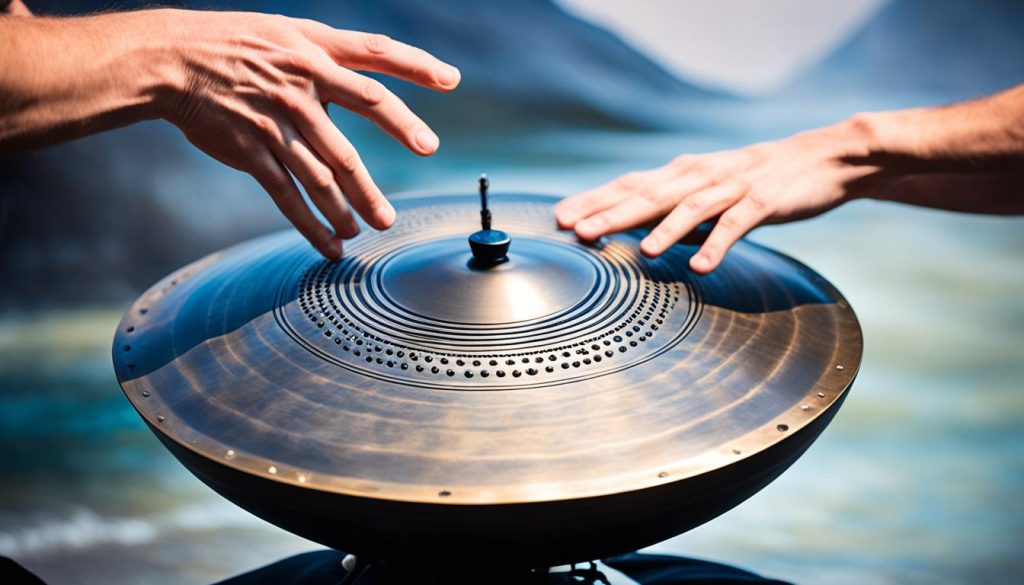
The handpan is a unique musical instrument. It is made of nitrided steel. Its two metal shells feature dimples that produce sounds.
When struck, these dimples create vibrations. These vibrations travel through the air, producing a rich sound.
A resonance hole beneath the handpan enhances its resonance. It helps the sounds travel. The differently sized dimples provide a wide range of tones.
Introduction to the handpan
The handpan is a unique percussion instrument, known for its shape and magical sounds. Its innovative design creates harmonious melodies. Since its emergence, it has captivated a wide audience, from musicians to therapists seeking serenity.
Each handpan is a unique work of craftsmanship, created by passionate artisans. Its sound quality results from a precise process that requires time and expertise. This percussion instrument is ideal for relaxation because it fosters an atmosphere conducive to meditation. With more than 100 makers worldwide, musicians have a vast selection to choose from.
In 2013, PANArt stopped producing the Hang, marking an important moment for the handpan. This decision helped preserve its value. The debate surrounding the names “handpan” and “Hang” reflects the evolution of this instrument.
The handpan encourages improvisation and creativity, allowing everyone to discover their own style. More and more people are joining the community, drawn by its mystical music. Learning to play it is a rewarding experience, whether through online courses or group sessions.
Origins and construction of the handpan
The handpan has its roots in the Caribbean steelpan tradition. It emerged in the late 1990s through the work of Felix Rohner and Sabina Schärer of PANArt, together with Reto Weber, a percussionist in Bern, Switzerland. Their collaboration gave rise to this percussion instrument, which became very popular.
Making a handpan requires great precision. Artisans use hand hammering and hydroforming. These methods shape the shell and its distinctive dimples. The dimples strengthen the structure and ensure remarkable sound quality.
Materials such as nitrided or stainless steel are essential. Originally, 5,000 first-generation handpans were made. They came in 45 different models, each one unique.
After PANArt ceased production in 2013, new brands such as Meinl, Metal Sounds, and Sela began making handpans. This development lowered prices and diversified the available range. The handpan’s history demonstrates its rapid success. It is now used in music therapy and yoga practice.
How does a handpan work?
The handpan is an instrument created in 2000 that combines craftsmanship with acoustic principles. Its specific dimensions give it optimal resonance. Its diameter ranges from 45 to 60 centimeters, which contributes to the production of vibrations and notes.
The handpan’s sonic alchemy
The dimples lie at the heart of the handpan’s acoustics. They are hammered by hand to produce specific notes. By striking them, musicians create vibrations that travel through the metal.
A handpan can have up to seven fundamental notes. Each note has three harmonics, enriching the sound. The resonance hole amplifies and modifies it, creating an immersive experience.
The vibrations make it possible to play a variety of scales, from the lightest to the deepest. Musicians can create soothing atmospheres without prior musical knowledge. This instrument offers endless possibilities for melody makers.
The dimples and their role in the sound
The dimples of the handpan are essential to its unique sound. Each dimple is hammered to produce specific notes. This creates a harmonious diatonic scale.
The size and shape of the dimples alter the quality of the sounds. They provide a variety of musical expressions that enrich the listening experience.
Large dimples produce low sounds, while small ones produce high notes. This diversity enriches the harmonies and creates overtones that broaden the tonal palette.
The handpan is accessible to everyone. It encourages intuitive learning from the very first notes.