
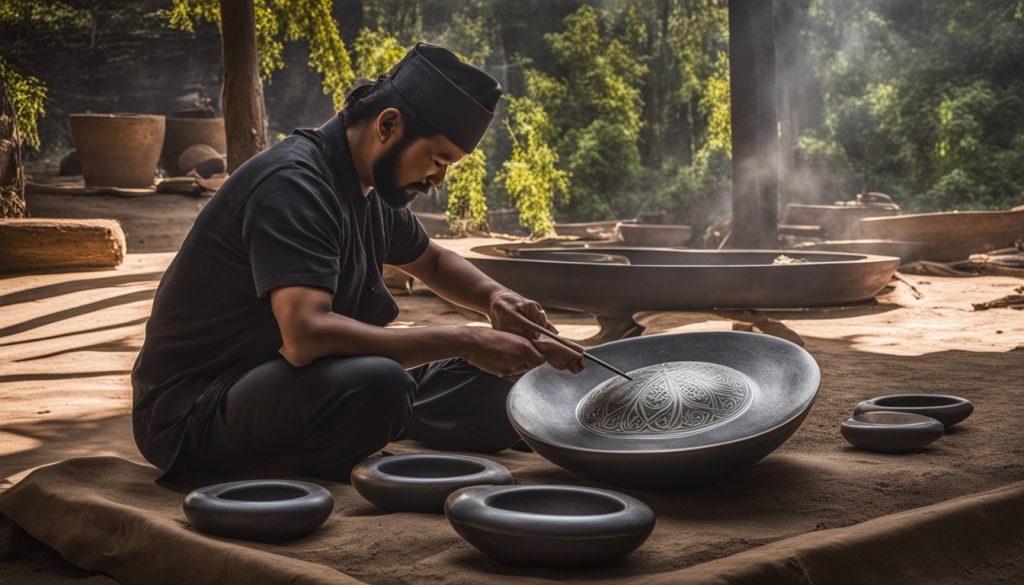
The handpan, this magnificent melodic steel drum, is often very expensive. Its price ranges from €1,200 to €2,500. This high cost can be explained by several important factors.
Making each handpan is a highly specialized process. It requires precise expertise and a great deal of time, often several weeks. The materials used also play a key role. Only suitable, carefully selected metals can produce the unique sound of this instrument, which is prized in ethnic music.
The cost of a handpan: a general overview
The price of a handpan varies considerably because it is influenced by several factors. These instruments are becoming more popular, which increases demand, and prices can range from €500 to €5,000. The price depends on the quality of the materials, the number of notes, and the manufacturing method.
A quality handpan with 8 to 10 notes costs between €1,200 and €2,500. Brands such as Zannefoo and MOOZICA offer some interesting models. For example, the LOMUTY Handpan in D minor costs €332.50, while the Elsebal Handpan Drum costs €315.00.
Market supply and demand affect prices. Few craftspeople are capable of making quality handpans, making these instruments rare and valuable.
| Instrument type | Price (€) |
|---|---|
| ZENEO Tongue Drum | 41.58 |
| LOMUTY Handpan in D minor | 332.50 |
| Elsebal Handpan Drum | 315.00 |
| AKLOT Handpan Tongue Drum | 52.49 |
| MOOZICA Steel Handpan Tongue Drum | 166.66 |
| Zannefoo Handpan Drum | 269.00 |
| 22-inch 9-note Handpan Steel Tongue Drum | 240.83 |
| MOOZICA Steel Hand Tongue Drum | 191.66 |
| 22-inch 12-note Handpan Steel Tongue Drum | 332.50 |
| TAMBÚ Steel Drum | 58.29 |
Before buying a handpan, carefully consider its quality and value for money. This instrument offers a unique musical experience and may be worth the investment.
Materials used to make a handpan
The choice of materials is crucial to a handpan’s sound quality. Stainless steel, nitrided steel, and Ember Steel are commonly used. Each material has characteristics that affect the sound and durability.
Stainless steel resists corrosion and produces a clear sound. Nitrided steel, meanwhile, offers a warm, enveloping tone.
The type of metal and its influence on sound
The chosen metal has a major influence on the handpan’s tone. The thickness of the steel, which ranges from 1 to 1.2 millimeters, also affects the sound. Stainless steel is perfect for beginners because it offers a broad tone.
Nitrided steel is preferred by musicians seeking greater tonal expression. However, it must be maintained to prevent moisture-related problems. Ember Steel, which is rare and expensive, offers unique resonance.
Heat treatments and their importance
Heat treatments, such as nitriding, are crucial. They strengthen the materials and improve the sound. Nitriding, which can take several weeks, provides greater durability and prevents rust.
Innovative tools allow the shells to be shaped precisely. A thorough command of heat treatments and the proper selection of materials are essential for producing a quality instrument.
The handpan manufacturing process
Creating a handpan is a complex and precise process. It requires specific equipment, such as work gloves and safety glasses. A craftsperson may spend 40 to 50 hours on a single instrument. This time reflects the importance of the craftsmanship required to achieve a perfect result.
Handcrafting and production time
A handpan is made from two steel discs measuring 1 mm and 1.5 mm thick. They are carefully curved to form a shell. Holes are drilled in the shell according to a note layout. This manufacturing process is delicate and costly.
The skills required and their impact on price
Craftsmanship is crucial to producing a quality handpan. Hammering techniques give it a unique tone. Each strike alters the sound, making every instrument special. Nitriding increases durability and improves quality, thereby raising the price.
The skills and precision required explain the handpan’s high cost. A passionate craftsperson ensures a memorable musical experience.
The law of supply and demand in the handpan market
The handpan market is governed by the law of supply and demand. Demand for these instruments often exceeds supply. This is due to the limited number of makers capable of producing quality instruments.
This scarcity drives prices upward. They can reach €3,500 for high-quality models.
More than 300 craftspeople make handpans worldwide. However, many struggle to meet demand. This creates opportunities for workshops such as ZenaPan, which reduce delivery times to 7 to 12 days.
Prices vary according to the craftsperson’s reputation and current trends. This limited supply pushes prices higher.
The handpan is becoming increasingly popular, particularly in music therapy and yoga practice. Buyers are willing to pay high prices for these instruments. The lack of affordable options and the demand for customized or expert-level models drive prices upward.