
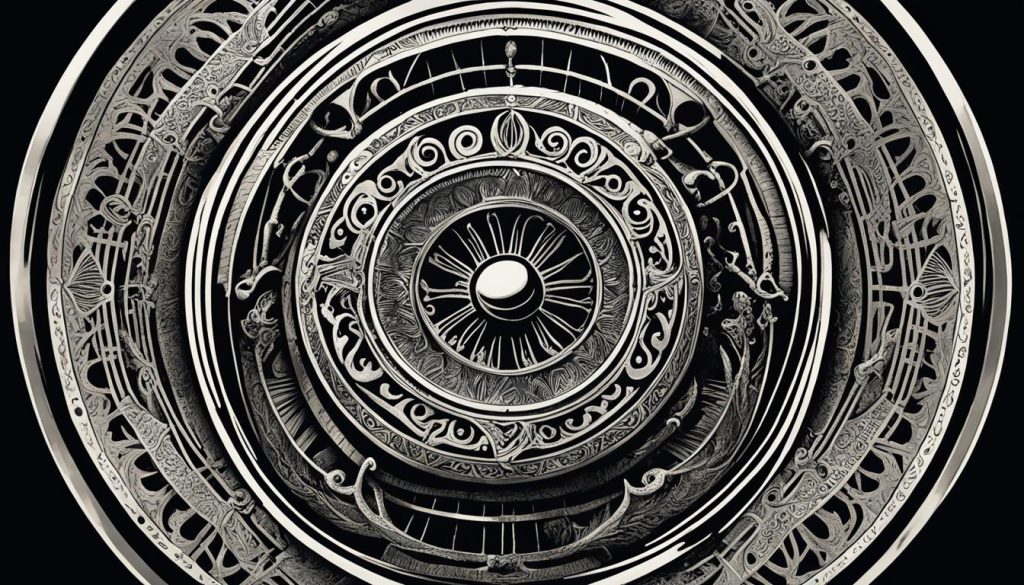
The handpan, a unique musical instrument, has a rich history. It was created in the early 2000s by Felix Rohner and Sabina Schärer of PANArt. They created the “Hang,” a Swiss German word meaning “hand.” This instrument blends modern innovation with ancient traditions.
Inspired by the Indian Ghatam, it quickly gained worldwide popularity. Its handcrafted construction and meditative qualities make it a highly regarded instrument.
The development of the handpan reflects an exciting evolution in the world of percussion. It has found its way into a variety of musical styles and interpretations.
Indian Roots and Inspiration from the Ghatam
The Ghatam is a well-known percussion instrument in India. It has been used in classical music since the eighth century. Also known as the Ghara, this clay instrument reflects the richness of Indian music.
It is valued for its aesthetic appeal and its ability to create melodies from an everyday object.
Origins and Etymology of the Ghatam
The name “Ghatam” comes from its original use as a “water pot.” Over time, it became an important percussion instrument. The melodies and rhythms it produces play a key role in Indian music.
The Ghatam has had a profound influence on music, connecting the past with the future. It demonstrates the importance of history in music.
Influence on the Handpan’s Design
The Ghatam influenced the creation of the handpan. In 2000, Felix Rohner and Sabina Schärer created the handpan, drawing inspiration from the Ghatam. This transformed the world of percussion.
The handpan combines influences from the Ghatam and the steel drum. It offers a wide variety of sounds and playing techniques.
Through its musical influence and innovative character, the handpan creates hypnotic atmospheres. Musicians appreciate it for its accessibility and enchanting sounds. It carries the Ghatam’s legacy into contemporary performances.
PANArt’s Creation of the Handpan
The creation of the handpan is a story filled with innovation and passion. Felix Rohner and Sabina Schärer, the founders of PANArt, played an essential role in this project. They began in Bern, Switzerland, seeking to create a unique and accessible instrument.
Collaboration Between Creators Felix Rohner and Sabina Schärer
Felix Rohner and Sabina Schärer worked together to create the handpan. Their work resulted in unique prototypes and ultimately gave rise to the Hang. This collaboration transformed percussion instruments by introducing original and captivating sounds.
Early Days and Immediate Success
The handpan achieved rapid success after it went on sale in 2000. Its unique sounds appealed to artists and music enthusiasts. From 2001 to 2005, PANArt sold more than 5,000 Hangs in a range of models.
In 2005, the handpan gained popularity through YouTube. This increased demand and encouraged the growth of a passionate community. Today, the handpan is regarded as a unique instrument of the 21st century.
| Year | Event | Impact |
|---|---|---|
| 2000 | Launch of the Hang | First public presentation of the instrument |
| 2001-2005 | Production of the first generation | More than 5,000 units produced in 45 tonal models |
| 2005 | Renewed interest through YouTube | Worldwide popularization and growing interest |
| 2013 | End of Hang production | Preservation of the instrument’s uniqueness |
The Handpan’s Evolution and Popularization
During the 2000s, the handpan’s evolution gathered momentum. This growing demand was seen around the world. The instrument’s appeal stems from its distinctive sound and versatility.
Artists incorporated the handpan into a range of genres, broadening its audience. This reinforced its status as an important instrument.
Surging Demand in the 2000s
The handpan’s popularity soared during this decade. The search for musical relaxation played a key role. Many artists explored its sound in different settings.
Music festivals showcased the handpan and attracted an engaged audience. The handpan’s wider availability created a network of enthusiasts. This encouraged the emergence of new makers.
The Impact of Social Media and Music Festivals
Social media played a crucial role in spreading awareness of the handpan. YouTube and Instagram allowed musicians to share their performances. This made the instrument more accessible.
Music festivals embraced the handpan, helping artists gain recognition. This strengthened interest in this popular instrument. Today, the handpan is recognized worldwide thanks to social media and music events.
| Event | Year | Influence |
|---|---|---|
| Launch of the first Hang Drum | 2001 | Beginning of a new musical era |
| First festivals featuring the handpan | 2005 | Increased visibility |
| Surge in performance videos on social media | 2010 | Strengthening of the community |
| International popularization of the handpan | 2015 | Greater access to the instrument |
Legal Disputes and Counterfeits
The handpan’s success sparked extensive debate over intellectual property. Counterfeits pose a major problem for creators and makers. As the pioneer, PANArt sought to protect its design from new makers. This struggle illustrates the tension between innovation and copyright protection in music.
Intellectual Property Disputes
Legal battles are a major issue for the handpan. Creators must consider how to protect their work under the law. Original makers often have to fight counterfeits that threaten both their reputation and that of the instrument.
The Emergence of New Makers and a Diversity of Styles
PANArt’s decision to end production in 2013 encouraged the emergence of nearly 300 new makers. They bring variety and new sounds, enriching the market. However, this raises questions about authenticity and respect for the original creations.
| Aspects | Impact |
|---|---|
| Legal disputes | Protection of creators’ intellectual property |
| Counterfeits | Reduced integrity of the instrument |
| New makers | Greater diversity of styles and sounds |
| Handpan market | Revival with nearly 300 production workshops |
Conclusion
The handpan has experienced a meteoric rise since its invention in the early 2000s. It has become a symbol in the world of percussion. The handpan’s popularity has soared, captivating musicians from every background with its melodic, harmonic sounds.
This instrument has a profound influence on music as well as on emotional and physical well-being. It is also believed to offer therapeutic benefits. Studies suggest that its specific frequencies may reduce stress and promote relaxation.
The handpan has a promising future. A passionate community is exploring new techniques and incorporating the instrument into meditation and music therapy.
In short, the handpan is more than just an instrument. It is a tool for creativity, mindfulness, and health. Growing interest in it is opening the way to further innovation and exploration.