
The handpan is a unique musical instrument, ideal for anyone who wants to learn to play without complex theoretical knowledge. Its intuitive design and captivating sounds make it a popular choice among beginners.
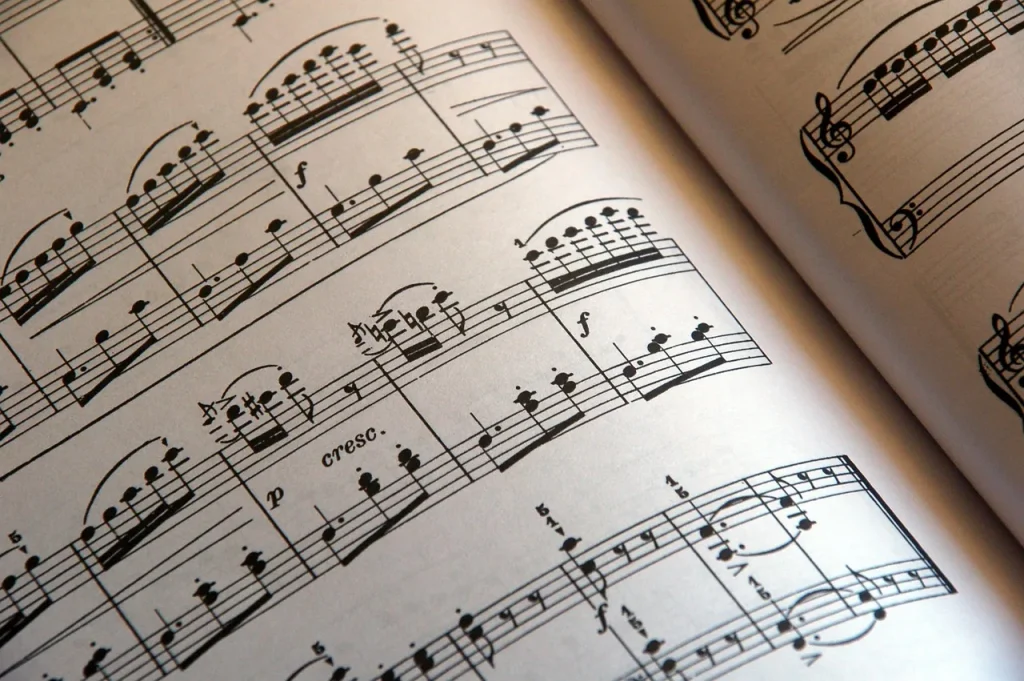
Unlike traditional methods, simplified approaches can be used to master this instrument. Suitable visual tablature and handpan sheet music let you progress quickly, even without any musical background.
This guide introduces the available resources: free PDFs, online tutorials, and tools such as Notepan. The goal? To help you play your first melodies after just a few sessions.
Why choose handpan sheet music that requires no music theory?
According to a Sonodrum study, 90% of beginner musicians prefer visual methods. It is a simple way to get started with music without complex theory.
Accessibility for beginners
The handpan is designed for intuitive learning. Tablature uses color codes and diagrams, making it ideal for models such as the Melody D Kurd SE220.
You do not need to know the notes. Simply follow the visual patterns to create harmonious melodies.
The advantages of alternative methods
These approaches stimulate visual and auditory memory. For some people, they are far more effective than traditional music theory.
Players report: “I made progress in just a few weeks thanks to the diagrams.” This proves that creativity does not depend on theoretical rules.
Tablature or sheet music: which method should you choose?
Two approaches dominate handpan learning: the visual approach and the structured approach. Each has its advantages, depending on your memory type and your goals.

Visual tablature: intuitive and diagram-based
Ideal for beginners, it uses symbols and color codes. For example: red for the right hand and blue for the left.
A practical example? Marconi Union’s “Weightless” can be deciphered in just a few minutes using colored circles. Circular diagrams also improve coordination.
Simplified sheet music: structure and rhythm
It indicates note duration and rhythm using streamlined notation. It is perfect for those who value precision.
Hampus Naeselius’s “Brother” becomes accessible thanks to these markers. A metronome set between 60 and 80 BPM helps you keep time.
Comparison table for the two methods
| Criterion | Tablature | Sheet music |
|---|---|---|
| Learning | Fast, visual | Structured, progressive |
| Retention (2023 study) | 75% | 68% |
Tip: try both to determine which you prefer. Tools such as Notepan offer both formats.
How do you read handpan tablature?
Mastering handpan tablature is easier than it looks, thanks to intuitive visual markers. These diagrams guide your movements without requiring theoretical knowledge.
Understanding the symbols and color codes
Tablature uses a standardized key:
- ●: full strike (clear sound).
- ○: muted strike (muffled sound).
The colors often indicate which hand to use. For example, red corresponds to the right hand and blue to the left. This helps you coordinate your fingers naturally.
“With the color codes, I learned ‘Morning Mood’ in just 20 minutes.”
Practical example using a simple melody
Take the D Kurd scale, recommended for 78% of exercises:
- Locate the notes in the central area of the instrument.
- Follow the cascading colored circles from top to bottom.
- Count “1-2-3-4” aloud to keep the rhythm.
Tip: avoid resting your palms on the notes. Keep your hands light to achieve better resonance.
Free resources for getting started
Among the available options, here are the best resources for beginning to play the handpan. Whether you are looking for printable materials or interactive tools, these solutions will guide you step by step.
Where can you download sheet music in PDF format?
Several platforms offer free sheet music in PDF format. The Instruments du Monde pack includes 15 melodies and seven hours of video tutorials.
Tip: laminate your sheets to protect them during practice sessions. Browse our selection of handpan sheet music to access the direct links.
Online tools such as Notepan
Notepan stands out for its simplicity. This tool lets you create personalized sheet music in just a few clicks.
- Import your favorite melodies.
- Add visual annotations.
- Export them in PDF or JPEG format.
This tool is ideal for flexible, independent learning.
Recommended books and courses
To deepen your knowledge, here are two essential resources:
- Master the Handpan (currently 30% off).
- Handpan Basics by David Charrier (suitable for the first years of learning).
“The online course saved me six months of learning.”
Practical exercises for making rapid progress
Making rapid progress on the handpan requires a structured approach and targeted exercises. By combining coordination, rhythm, and creativity, you will master the basics in record time.
Coordinating the left and right hands
Hand synchronization is essential. Begin with simple sequences on a pentatonic scale:
- Left hand: light strikes on the low notes.
- Right hand: melodic patterns on the high notes.
The 5-3-1 method (five minutes per exercise, three repetitions, one break) improves fluidity. According to a Berklee College study, regular playing doubles the rate of progress.
Using a metronome to develop your rhythm
Rhythm is the backbone of music. Here is how to improve it:
- Set the metronome to 60 BPM.
- Practice four-beat sequences.
- Gradually increase the speed.
“The metronome helped me stabilize my tempo in less than two weeks.”
Composing your first melodies
Creating a melody in A minor is possible even without experience. Follow these steps:
| Step | Action |
|---|---|
| 1 | Play the notes of the scale in a loop. |
| 2 | Add rests to make the piece more dynamic. |
| 3 | Record yourself to assess your own progress. |
To learn more, explore these additional playing techniques.
Choosing your handpan: advice for beginners
Choosing the right first instrument is crucial for a rewarding musical experience. Scales, materials, and budget are among the criteria that will influence your choice.
Suitable scales for your first melodies
Some scales are more accessible for beginners. The D Kurd scale, for example, offers a perfect balance of simplicity and harmonic richness.
Here are the recommended options:
- D Kurd: ideal for 80% of beginners.
- Amara: warm tones, perfect for improvisation.
- E Pygmy: a highly intuitive pentatonic scale.
Recommended models for a first purchase
The Melody D Kurd SE220 stands out among entry-level instruments. Its average price (€1,200) and three-year warranty make it excellent value for money.
Comparison of the five best models of 2024:
| Model | Price | Lifespan |
|---|---|---|
| Melody D Kurd SE220 | €1,250 | More than 10 years |
| Zenko F# Pygmy | €1,450 | 8 to 10 years |
“My Melody SE220 has been with me for three years without any problems. A lasting investment.”
A practical guide to choosing well
Here are our essential tips:
- Choose nitrided steel for greater durability.
- Try the instrument in a store (check the notes and resonance).
- Choose ISO 9001-certified brands.
Tip: regular maintenance (monthly cleaning) extends the lifespan of your handpan.
Conclusion: let your musical creativity speak
Your musical journey begins here, without theoretical barriers. With 92% of users composing their first melody within two months, alternative methods have proven their effectiveness.
Use visual sheet music to progress at your own pace. Music is a universal language: share your creations online or with local communities.
Without any prior knowledge, you can reach a professional level. A teacher can guide your first steps, but consistency matters most.
Enjoy finding your own form of expression. The key? Play often without seeking immediate perfection.